“How do you take so much time off to hike,” I hear often when I tell anyone about my past experiences or future plans. Sometimes it’s laced with judgment and comes off snide. Other times, it is sincere – this person wants to know how I do it so they can do it, too. There is no one answer to this question. There’s no ticket to success that gets a person to the point in life where adventure awaits around every corner and travel is the norm instead of the exception. Instead, there are lots of little things, and lots of sacrifices, that make this lifestyle a possibility. Here, I’ll share a few things that have worked for me. Maybe they will work for you, too!
What I do that allows me this kind of freedom:
I work, a lot. I’ve made a LOT of sacrifices to enjoy the lifestyle that I lead. In the spirit of transparency, I am very, very poor. For the last 5 years, I’ve chosen to work multiple part time jobs rather than have one stable career in order to travel and hike as much as possible. These jobs included substitute teaching, waitressing, tutoring (often online), and working mobile dog shows. I often did ALL of these things simultaneously, working up to 2 or 3 different jobs in the same day, sometimes for weeks on end without a day off. This was exhausting, but it allowed me to frequently plan 1-3 week chunks of time off where I could travel and not work at all. These jobs are easy to leave and easy to return to, and this is what allowed me to take three months off from work, two separate times, to attempt a thru-hike of a long trail. But, they do not usually come with health insurance or a retirement plan.

I sacrificed a stable home. Rather than a house that I have to pay a mortgage on, pay utilities for, and pay for routine upkeep and property maintenance, I bought and moved into a tiny travel trailer. This kept my monthly living expenses to around $600/month total when I was stationary, and much much less when I was on the road.
I don’t buy new things. In an effort to save money and minimize my impact on the Earth, I decided to stop purchasing new things. Of course, there are exceptions, but these come with a lot of deliberation. I choose to purchase things like clothing, shoes, and a lot of my hiking gear second-hand. This drastically reduces the amount of money I’m spending on purchases and increases the amount of money I can spend on adventures.
How can I do this?
There are two aspects of this question that deserve consideration. The first is money. The “I can’t take the time off because I need the money I will earn by working” excuse. The second is time. This one is usually presented as “I could never take that much time off from my job” or “my job doesn’t allow me that much time off.” I’ll address these two things separately.
I don’t have the money to take time off from work.
Control your daily spending.
Where does all your money go? This is a question that makes most people uncomfortable. Truth is, a lot of us don’t know where all our money goes, and we wish we did. Here’s a tip: that $3 coffeeshop latte you grab every morning on the way to work is costing you $15/week. Are you packing a lunch or eating out for lunch every day? Even if you only eat out 3 times per week, that’s $30/week. How often are you shopping for things you don’t really need? Do you need a new blouse this week, or yet another pair of shoes? Do you have to buy name-brand grocery products? One new article of clothing a week is probably at least $30 (depending on what kind of clothes you buy).
With the three things I mentioned here, that’s $75/week you could save if you just didn’t spend the money. Make coffee at home, pack your lunch, and wear what you already own (or shop at thrift stores for big savings). In one month, you could have enough extra money ($300) for a weekend hiking trip or a guided rafting or kayaking excursion to somewhere within driving distance for two people.
Be conscientious of how you spend your money while traveling.
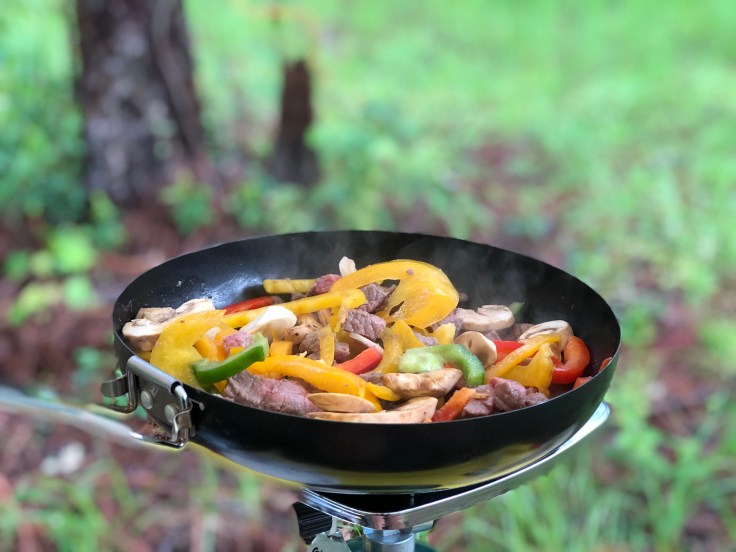
Do you look at travel as an opportunity to pig out and indulge in decadent dining experiences? If so, maybe its time to re-evaluate what traveling is all about. Yes, experiencing good local food is a part of travel, but so is experiencing everything else an area has to offer. Oh and: eating at Longhorn Steakhouse in a town you’ve never been to before doesn’t qualify as a fine culinary experience – it qualifies as a waste of money. Cook your own steaks and veggies over the grill at a state park campsite for half the cost and twice the fun.
Do you sleep in hotels while you travel? Hotels are the single biggest waste of money for anyone who is trying to travel on a budget. Depending on your location, there may be numerous options for inexpensive (even FREE) places to sleep. National Forest campgrounds, state parks, and hostels are three options that can drastically reduce the amount of money you’re spending on lodging. Take the money that you’d spend on one night in a three-star hotel and buy yourself a decent tent and sleeping bag. This way, you’ll be able to sleep comfortably in mother nature’s 5-billion star “hotel”.
Finally, you do have to consider that gas is expensive. Here is where it is important to think about how much you have to spend and where you can go with that money. Take the time to research and really look into what’s available within a reasonable driving distance for you. What’s reasonable? That depends. I consider two hours from “home” (or basecamp) to be about tops for a day trip, where I’m returning home at the end of the day. If I have a whole weekend to play, I’m willing to drive 3-4 hours one way. A week? I’ve been known to drive 10-12 hours one way to get somewhere that I don’t have the opportunity to go often. Weigh the pros and cons, carpool when you can to split gas, and don’t load your vehicle down with so much gear and “stuff” that it’s guzzling twice as much gas due to the load.
Choose free or inexpensive activities.
There are loads of paid outdoor adventures out there, but if you look a little bit there are also a lot of free ones. State and National parks usually have entrance fees. If you’re camping in a state park to save money on lodging, explore the trails or rivers that are there – you already paid to get in. Otherwise, hit up a national forest or national recreation area instead. These are usually no-cost to enter, meaning you can hike on the trails and even camp there for free in many places. If you’re into boating, buy your own boat – this way you can put in at a free public launch and not have to pay daily rental and/or guide fees.
For entertainment, check out the website or facebook page of the town you’re visiting to find free events. Lots of places have free festivals, concerts, and even classes that can be taken for free. When you’re looking for dinner, try to find a small mom-and-pop place. These are usually cheaper than chains or fancy dining establishments and often have better food. For drinks, call around to nearby bars or breweries and ask about their specials and happy hour deals. Remember, it’s almost always cheaper to drink in the early afternoon than late at night.
I could never take that much time off work.
Short answer: yes you can
Contrary to popular belief, many jobs, even of the traditional office job type, aren’t immovable in their scheduling requirements. The original position may have been advertised as a 9-5, but if you’re in good standing with the company and have been there for a while, you may be able to convince your boss to adjust your schedule to allow for more time off.
For example, ask if you could work four 10-hour work days and have a three day weekend one week out of each month. Find out if there is any opportunity or option for remote work if you’d like to spend the summer in Alaska or the winter in New Zealand. Want to spend a week backpacking on the Appalachian Trail, but don’t want to use your PTO? Find out if you can put in extra hours at the office during evenings and weekends this month and take a full week off next month. Many companies and bosses are open to this sort of thing, you just have to ask.

If you are wanting to do something more epic than a long weekend here and there, something big like a thru-hike attempt, you’ll have to do a little more work. However, it IS doable. Find out if your company allows sabbaticals and what you have to do to get approved for one. If you’re in great standing with your employer and know it won’t cost you your job, ask about the potential for a leave of absence. If all else fails…
Quit your job and find a better one. I’m serious here. If it is really important to you to be able to pursue your dreams of traveling, thru-hiking, or just living more deliberately and your job is the only thing holding you back, there really are other jobs out there. I applied for a leave of absence from my teaching job in 2016, and it was denied. The next day I turned in my letter of resignation. I spent three months hiking the Appalachian Trail and it set me on the path to a new career that will be much more conducive to my lifestyle. You may find a better or different job that is more suited to your needs. You may even find that you are a qualified enough candidate for some positions to set your own terms.
Fit adventure into your normal routine.
Without taking any additional time off, one way that I get in so many hikes each year is that I plan to stop and hike no matter where I am or where I’m headed. For example, last week I was headed to Tampa to work a dog show. I had to be in Tampa Monday night, and I was off work on Sunday. So, I left home Sunday and headed out into the National Forest near Ocala, Florida, where I could camp for free and hike on the Florida Trail. Monday, I continued south on I-75 and stopped at Itchetuknee Springs for a short hike and to get some pictures of the incredible cold springs located there. I was making the drive anyway, so this trip didn’t cost me anything extra in gas. I camped for free, so I spent no money on lodging, I paid $5 to get into the State Park to hike. I didn’t have to take any time off work, because I was already off work on Sunday anyway.
I’ll never forget the first backpacking trip that I planned and implemented myself. I wanted to do three days/two nights on the Appalachian Trail, but I only had one day off. I left work at 4pm on day one, started hiking at 8pm, and night hiked the first six miles of the trip before setting up camp. I hiked all day on day two, and was off trail around noon on the third day. This gave me time to run home, shower, and make it to work by 3pm. You do what you have to do in order to do the things you love.
Final thoughts.
If I had a dollar for every time someone said, “I’d love to do that, but I just never have the time/money,” I could take more time off to go on adventures. I try not to sound snarky, but I usually respond with something like, “you can do it, you just don’t want to badly enough.” The truth is, you make time for what you love. I LOVE hiking. Not hiking enough turns me into an anxious, stressed, miserable trainwreck of a person. Hiking is my meditation, my energy outlet, my soul food, my religion, my antidepressant, my happy pill. It is my priority. When you make something a priority, suddenly it isn’t so hard to find the time to do it.
How do you fit adventure into your busy life? I’d love to hear about your solutions for managing finances or a hectic work schedule with your lifestyle of adventure. Leave a note in the comments!

 Adventure Like A Girl
Once again, a great piece!!! All a question of priorities. Distance running used to be to me what hiking is to you. I was fortunate that I was able to work full-time at a job I loved while running a lot and in different places. Now that my body doesn’t like running any more, I’m thrilled to be retired so that hiking, my new, more time-consuming love, is something in which I can indulge virtually any time. I admire all you do to keep your priorities in order–it’s a lot of work but I know you feel it’s worth it. You rock, Stacia!!!
LikeLike