This post is going to be the first of a few different topics that I have in mind after my recent two-week trip to the Colorado Front Range. Sort of piggy-backing off of my most recent blog about traveling on a budget, adventuring without the use of a personal car saves on both gas and car-rental fees and leaves more money in your pocket for activities. I’m going to talk pretty specifically about the trip that I did, so obviously some of this won’t apply to every travel destination, but hopefully you’ll click away from this post with a few ideas for how to get around on your next adventure.
Getting to and from the airport
A huge money guzzler, especially if you’re going to be gone for an extended period of time, is parking at the airport. One way that I’ve found to avoid this altogether is to park somewhere else and get a ride to the airport. How do you get a ride? Well, there are lots of ways.

Bum a ride from a friend
This is my favorite way, because not only do I love the opportunity to take a friend out to dinner or reconnect over a half hour drive, but it allows you to leave your car somewhere you know is safe: their house. If you’re flying into/out of a major airport, chances are someone you met somewhere once, a friend from high school, or a distant aunt/uncle/cousin lives in the city and would be happy to help out. Just make sure you offer to compensate them for gas/time, offer to let them use your vehicle while you’re out of town if the need arises, buy them a meal, etc. Don’t be a mooch.
For my trip, my friend Steve (hey Steve!), who I know from training dogs, drove me to and picked me up from Marta (more in a moment) and let me park my truck at his house for the two weeks I was gone.
How to: try posting on facebook about what you need. State where you’re trying to get to and how much you are willing to compensate. You may be surprised at the responses you get.
Utilize airport transit options
I did this for both my trips into and out of the Atlanta airport, and my trips into and out of the Denver airport. Most major airports have transit options that allow people to commute, fairly inexpensively, into and out of the cities to which they are associated with. Atlanta has Marta, which can get you into the airport from many locations around Atlanta and has a pretty convenient schedule. I was able to hop on Marta with just a 15 minute wait, even at midnight. My round-trip ticket on Marta from the Doraville Station was less than $5 with my Breeze card.
Denver has the RTD light rail, a train that will take you from the airport to Union Station in downtown Denver for $7. From Union Station, I was able to connect with multiple train and bus options to get me pretty much anywhere else I needed to go. Round trip cost: $14.
How to: make sure to thoroughly research fares and schedules prior to your trip. Know where and when to catch your ride and where to take it to. If you’re leaving an airport, you’re normally going to be headed for “Ground Transportation”, so follow the signs and you’ll end up where you need to be.
Rideshare services
Of course, you can always call an Uber or Lyft to get you where you need to go, but this generally gets a little more expensive than other transit options. I did take an UberPool ride (shared with other riders to reduce cost) into Denver to catch a train to the airport. Since it was a short distance and the cost of the ride was shared, it cost less than $5.
I used all three of these options for getting to and from the airport. My total cost for this trip, including buying Steve breakfast and giving him some gas money for driving me to and from Marta, was about $50. No parking fees, no hassle.
How to: download the apps Uber and Lyft. I like to pull them both up and compare options and prices for each trip I take. Simply follow the prompts and you’ll have a ride in no time. I highly recommend the “Uber Pool” and “Express Lyft” options because ridesharing is cheaper and more environmentally friendly.
Getting around while you’re there
If you followed this adventure on Facebook or Instagram, you’ll know that I saw a lot of different places while I was in Colorado. This was due to several things, most notably the fact that I have some really awesome friends. Let me elaborate:
Again, bumming rides from friends

The day I flew into Denver, my friend Dan (hey Dan!) loaned me his Jeep so that I could explore the city while he was working. Once I arrived at Union Station, I was able to take a free city bus to the location where his vehicle was parked. I then drove to Golden to meet a gal from a local hiking group for my first hike of the trip. I put $20 in gas in Dan’s car before returning it.
On day two, I wanted to go see Garden of the Gods. Turns out, my friend Chris (hi Tippy!) was in Colorado Springs. This turned out to be one of my more expensive excursions of the entire experience, but I was able to take a Greyhound from Denver down to Colorado Springs, where Chris picked me up, went with me to Garden of the Gods, and then drove me back to Denver. Total cost: about $30 for the ticket and giving Chris some gas money.

I went on two overnight backpacking trips while in Colorado. Getting rides to remote trailheads is arguably going to be the most complicated part of any adventure excursion, but if you have awesome friends like I do, it won’t be a problem. On the first trip, I was accompanied by my friend Zach (hey Zach!), who drove to and from the trailhead. The second week of my trip, my friend Clara (hi Avalon!) drove up from New Mexico to go kayaking and hiking with me. With her there, I was able to access hiking trails deep in the backcountry that there’s no way I’d have been able to get to otherwise.
How to: grow your network and do favors for your friends. Back in May, I picked Dan up from the airport when he flew into Virginia for Trail Days. During my 2016 thru hike attempt, I gave Clara (Avalon) a few rides around town to run errands. Paying it forward pays off.

Public transit
Many cities and even some smaller towns have free public transit options. I was able to get around Denver easily by hopping on the network of free city buses. Once I was up in Summit County (more in a moment), the Summit Stage bus system was free to ride and connected me with a huge network of trail systems and things to do and explore. I was literally able to take a bus from a Colorado Trail/Continental Divide trailhead. If you’re visiting a town, research the city bus system and then use it to your advantage.
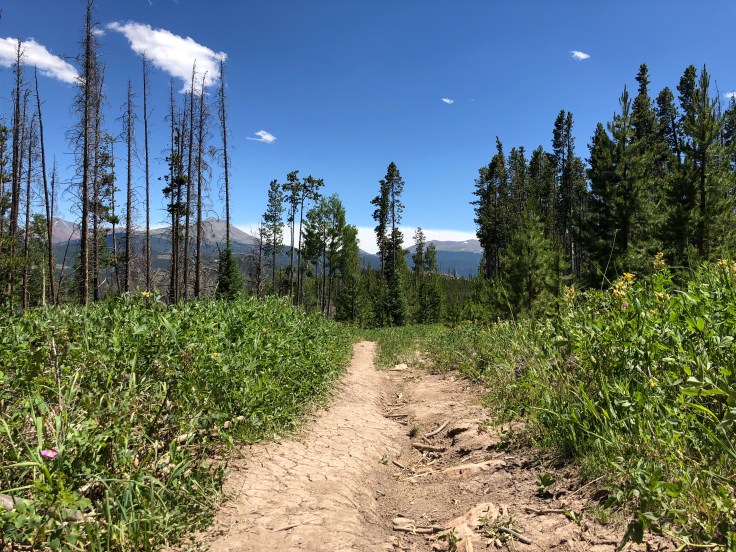
How to: research public transit options in the town you are staying in. See if they have an app. For example, the free Summit Stage bus system has an awesome app that allows you to track buses in real time and request rides from request-only stops. This free transit system makes exploring the mountain towns of Frisco, Dillon, and Silverthorne a breeze.
Commuter Buses
My least favorite option, but an important one nonetheless, is to use bus services such as Greyhound to get to places too far away to Uber or take a city bus to. I took Greyhound on two separate occasions during this trip. The first was from Denver to Colorado Springs, which cost about $20 as I mentioned above. The second time was to get from Denver to Frisco, up in Summit County. This ride was also in the $20 range and all in all, not a bad deal. The biggest hassle with these types of services, Greyhound in particular, is that the buses can be unreliable. My bus to Colorado Springs was over an hour late, and when I was headed to Frisco, there were people at the station still waiting for a bus that was supposed to have arrived the night before.
Between Summit County and Denver, there is also a bus system called “Bustang” that runs a commuter schedule that I have used in the past. This system picks up in Summit County early in the morning and heads to Denver, then goes from Denver back up into the mountains in the evenings. The cost is $12, which is great if your schedule is flexible enough to wait on a ride.

How to: again, figure out where you need to go and research ALL of the options to get there. If you’re riding a commuter bus, make sure you know when your bus is leaving and arrive a little bit early for boarding and loading luggage. Purchase tickets for Greyhound online the day before your trip if you can, you can usually save $2-3 off purchasing at the station.
Growing your network so you can explore even more!
One thing that consistently allows me to travel and explore on a tight budget is having a HUGE network of friends and acquaintances all over the country. Here are a few ways that I foster and grow these connections.

Join common-interest groups on Facebook
There are SO MANY cool groups on Facebook that will allow you to connect with other people that are doing the same things you are doing. As a full-time RV’er, I’m in groups about living in campers full time. As a hiker, I’m in groups ranging from very specific (focused around women hiking on the Appalachian Trail) to fairly broad (a ride-share board for hikers all over the country). If you know you’re planning a trip to hike on the Colorado Trail, for example, join a couple of Colorado Trail groups and try to connect with some of the other members.
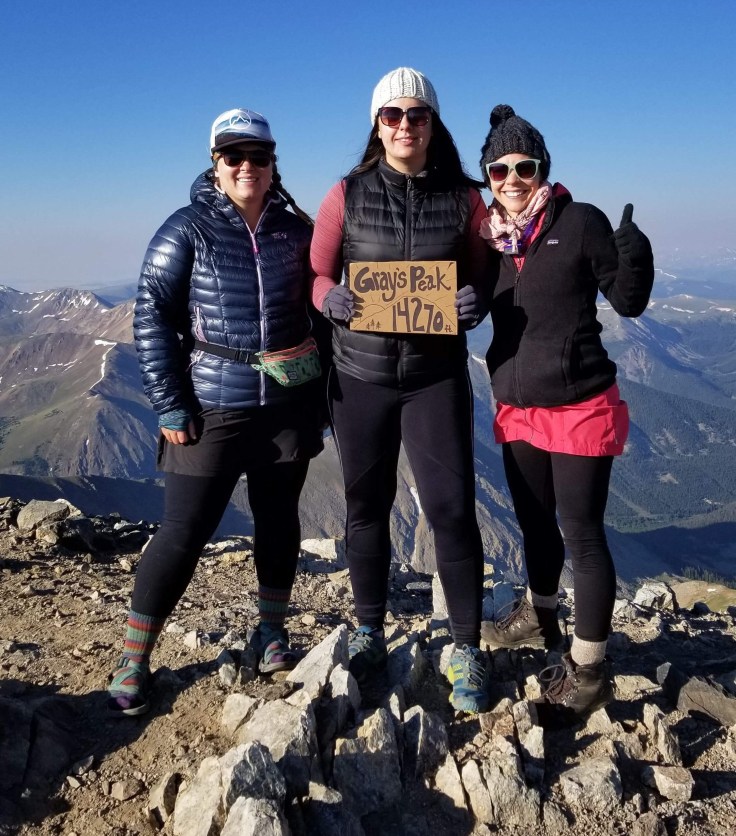
Through the hiking groups I’m a part of, I was able to connect with a girl on my first day in Denver to go on a hike (thanks to the Colorado chapter of Girls Who Hike). Thanks to the All Women, All Trails facebook page, I was able to connect with an incredible lady who let me sleep at her home in Littleton, took me on a hike, and took me kayaking. This same group connected me with two awesome ladies with whom I planned and the implemented hiking my first 14k’er with. These social networks exist for this exact reason. Use them!
Get out there!
Duh, right? But really. What I’m talking about is that if you have an opportunity to join someone new on a hike, go! You’ll make a new friend. While you’re out on your hikes or trips, talk to people. Talk to others at your campsite (this is how I met Megan, super cool hiker chick, and her dog Dalinar!) Talk to people at the trailhead. And don’t just talk to them, ask them if they are on social media. See if you can follow them on instagram or if they have a blog or youtube channel. Connect with them so that you can reach out to them in the future, and vice versa. And if they reach out to you, help if you can! I promise it will create good karma that will come back around tenfold.
Go on a thru-hike.
Only kinda kidding. My two thru-hike attempts have connected me with more incredible people than I can count. I would say that the vast number of friends that I have relied on for help, rides, accommodations, adventure buddies, etc. have been friends that I met while thru-hiking the Appalachian Trail. Do what you will with that information 🙂
So, now you know how I traveled around Colorado for two weeks without a car. You can probably add the figures up yourself, but in total I spent about $130 on transport the entire two weeks that I was gone. That includes getting to and from the airport, getting from Denver to Colorado Springs and back, getting from Denver to Summit County and back, and getting around all of these towns while I visited.
Have you traveled extensively in a region without a car? What are your go-to tricks and tips for getting where you need to go on the cheap?
 Adventure Like A Girl
Leave a comment