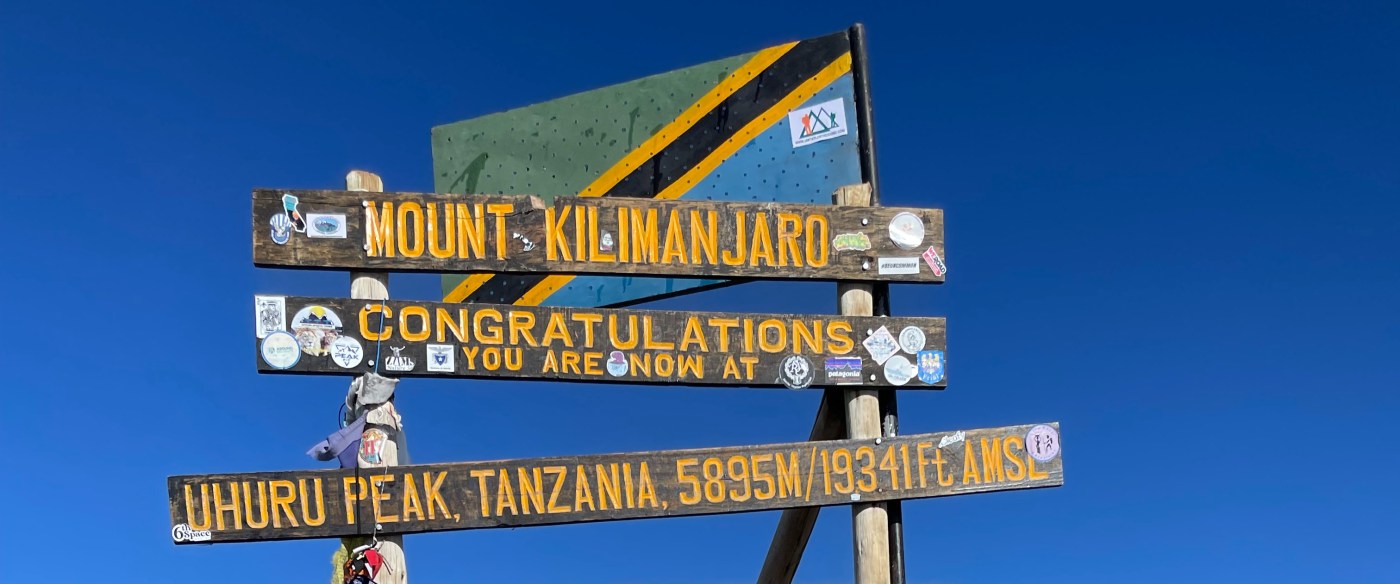
On of the biggest questions I get when I’m discussing Mt. Kilimanjaro with people is “what did you take?” This is a valid question and frankly, I didn’t really know what to take myself. My group was provided with a recommended gear list from TrovaTrip, who we booked our trek through. However, it was pretty generic and ultimately ended up not lining up very closely with what we actually needed to take on the hike.
My full LighterPack gear list is embedded at the end of this post, but in this post I will be talking exclusively about clothing.
Disclaimer: some links are affiliate links. These are products I used and loved and I am recommending them in good faith. Purchasing through my links helps fund adventures and the creation of content like this, which takes hours of time to produce.
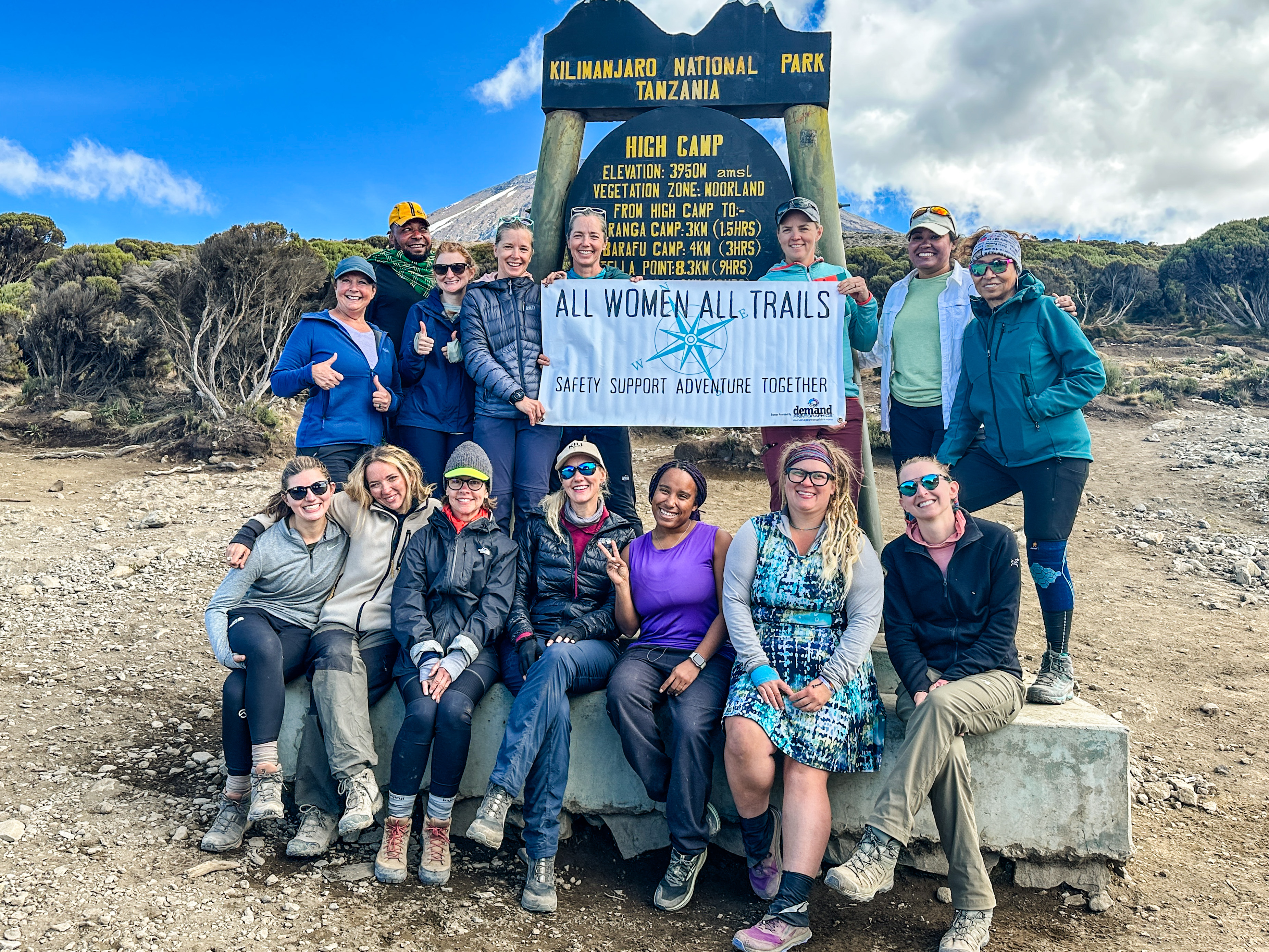
What I wore:
I’ll be honest, I had NO idea what to expect with regard to weather on the mountain. I knew summit night would be cold, but other than that the information about weather was all over the place. I decided to pack for any weather imaginable and brought a combination of warm and cold weather clothes in addition to my summit gear. Our daily temperatures were in the 40s-70s, with nighttime temperatures around freezing. Above 18,000ft on summit night temperatures were in the teens and twenties (Fahrenheit).
Field note: what you will need may vary dramatically depending on the season you are hiking in. My group went during peak season and had very mild weather. You will need different clothing for off-season or bad-weather trips.
Daily hiking wear
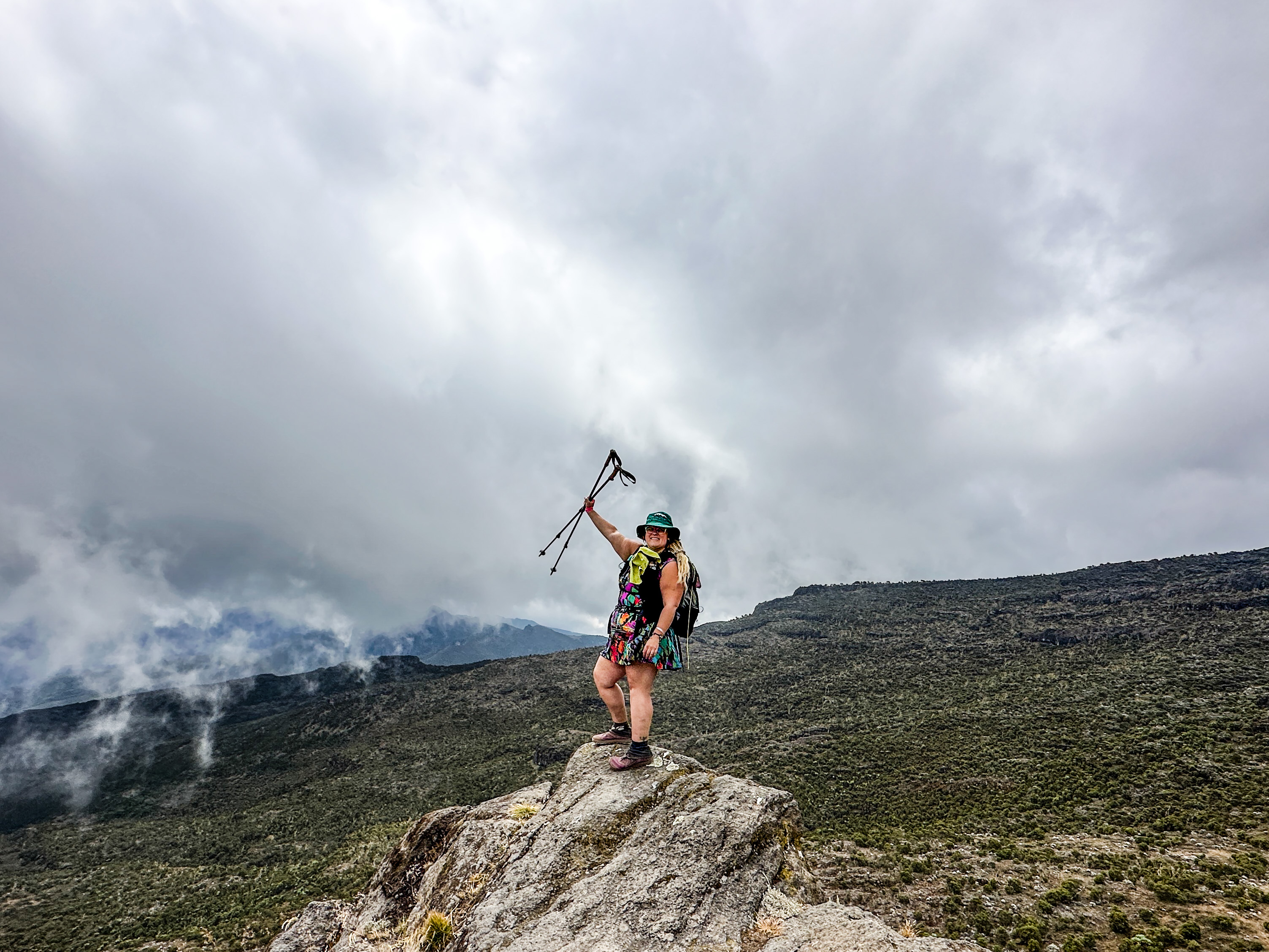
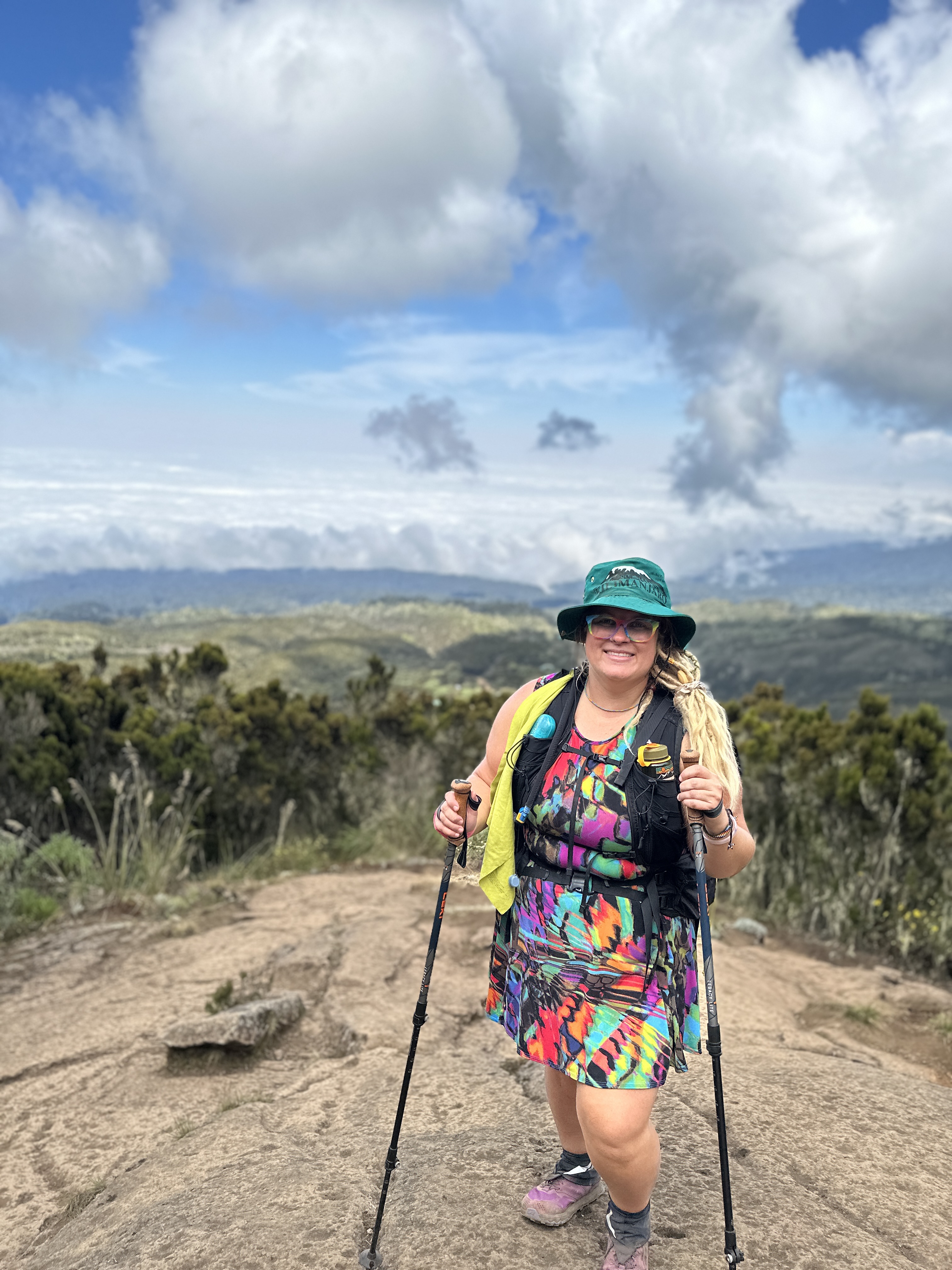
Every single day, at some point, I wore the following items:
- Hiking dress
- Sports bra
- Spandex exercise shorts
- Darn Tough Merino Wool socks
- Sun Hat (I brought a Sunday Afternoons hat, but ended up purchasing a “Kilimanjaro” hat that I wore for most of the hike)
- Lightweight Gaiters
- Altra Lone Peak Trail Runners
Additionally, parts of some days, I wore the following items (I usually carried these in my day pack to adjust layers as needed throughout the day):

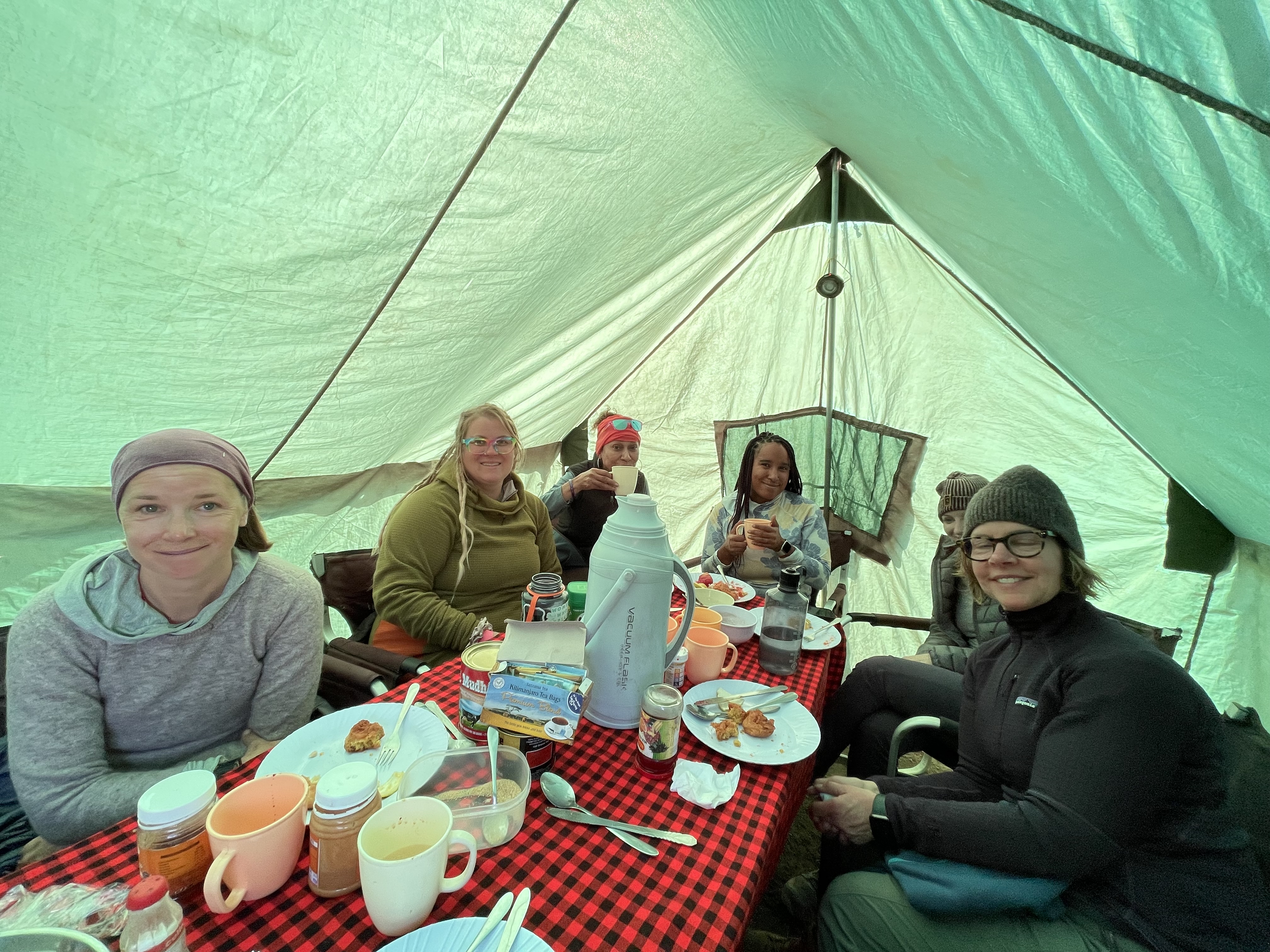
Daily Camp Wear
I personally like to change into dry, comfy, warm clothes as soon as I reach camp every day. Each day upon arriving at camp, we would be escorted to our tents where we were given time to clean up and change. The guides would bring hot water and soap around for washing up, and I always used this time to bathe (I brought bath wipes) and change into dry clothing as well as attend to any skin issues such as sunburn or chafing. Afterward, I would change into my camp clothes. I brought one pair of fleece camp pants, two long sleeve tops (more later), and four pairs of underwear.
- Fleece camp pants
- Thermal long-sleeve base
- Fleece and/or puffy
- Dry fit micromodal underwear
- Thick camp socks
- Crocs
Summit wear
Summit night was really the only night that I changed up my attire very much. I had to wear LOTS of additional layers for the ascent on summit night, but ended up shedding layers on the way back down in the daylight.
Upper Body Layers
- Long sleeve baselayer
- Thermal base layer
- Merino wool quarter zip
- Fleece dress w/hood
- Puffy
Lower Body Layers
It’s worth noting that I also carried a “summit jacket” and “ski gloves” that our team’s lead guide insisted that I have. These two items are not in my Lighterpack list. My porter hauled these heavy items up and back down, and they were in my daypack on summit night, but I never put them on. Others in my group did wear their ski jackets, ski pants, and ski gloves, but for our mid-September summit, I did not find these items necessary. That brings us to:

Clothing I would have changed, brought, or done differently:
I only packed two pairs of hiking shorts because I expected cooler temps to necessitate pants as we went. I figured I’d wear hiking shorts the first and second day, possibly some of the third, and then the final day. Turns out, I wore shorts at some point every single day. It worked out, but I was smelly after alternating the same sweaty shorts for 7 days. I would have considered bringing another pair.
I brought two pair of athletic leggings on this hike because I assumed I’d be colder than I was. I used one pair of leggings for layering during the first 5 days. On summit night, I wore a clean pair. I probably could have gotten by with one pair.
The thermal base layer I wore on summit night is the same thermal base layer I had been wearing for sleeping up to this point. After summit night, I swapped my sleep shirt for a second long-sleeve base-layer that I had been carrying. I could have gotten away with not bringing this back-up shirt. Since it was used as a mid-layer during summit night and was not in contact with my skin nor exposed to the dusty open air, it would have been “clean enough” to use for sleeping for one final night.
I brought a thin ultralight backpacking rain jacket that I already owned and in hindsight, I wish I had purchased a heavier-duty lined/insulated rain jacket. This would have more effectively kept me warm on the ONE day that it rained and would have doubled as an alternative to the ski-jacket I was made to carry.
I should have brought goretex or otherwise waterproof mittens to put over my gloves in the event of rain. I was wearing my merino glove liners the day it rained and they got soaked, so my hands were freezing. This was the only time on the trip that my hands were cold. I ended up having to hang my liner gloves in the mess tent overnight to get them to dry out over the stoves.
Shoes
I brought three pairs of shoes on Kilimanjaro and I’m SO glad I did. I debated long and hard about whether or not I wanted to bring both my regular Altra Lone Peak trail-runners and my Altra Lone Peak Hikers. I knew I wanted the Hikers for summit night: they have a suede upper that gives a little more defense against rocks and they have less mesh which makes them warmer. They are just a more rugged shoe and seemed more appropriate. However, I almost exclusively hike in low-top Lone Peaks and I was concerned about switching things up and hiking in the LP Hikers for seven days straight without having done that before.
Ultimately, I brought both and it was the correct decision. I wore my regular Lone Peaks for the vast majority of the hike and I was comfortable with zero foot pain or blisters. I wore the LP Hikers on summit night. I will say that my toes were a little cold during the first few hours of hiking. My feet run hot and I was really not uncomfortable, but some people probably would have been in this situation. These shoes worked for me but may not work for everyone. My lead guide was not thrilled that I did not have goretex hiking boots, but I know my feet and that I cannot tolerate long hours in stiff waterproof boots. There was not one single day, not the day it rained and not even the final day when we tromped through mud for six hours, that I wished I had waterproof shoes.
Several people mentioned that it would be too cold for camp shoes and a lot of people seem to not bring them, but I found having camp shoes to be invaluable. It was wonderful to be able to take my dusty hiking shoes off at the end of the day, wash my feet, and put on a pair of cozy socks followed by light and breathable crocs. I never found it to be too cold to wear them, and they were extremely useful for nighttime bathroom trips.
There you have it!
This is all the clothing I brought and wore on the mountain. There are links to items that I used where appropriate. One thing I will say is that your guides are the experts on the mountain, but you are the expert on your body. Take their advice into consideration, but remember that it is YOU that has to wear this clothing and hike in it for 6-8 days (depending on your itinerary and route) and ultimately, it is YOU who will be uncomfortable if you don’t bring the clothes you know work for you.
Please don’t hesitate to reach out to me via socials or email if you have any questions. I’m always down to talk gear!
 Adventure Like A Girl