
When I started planning a trip to Iceland, backpacking in the highlands was my top priority. With limited time and little interest in the usual tourist stops, I set my sights on the country’s most iconic trekking route: the Laugavegur Trail. This 34-mile traverse from Landmannalaugar to Þórsmörk (Thorsmork) moves through a surreal blend of geothermal vents, along glacier-fed rivers, across black ash deserts, and down into the lush oasis Þórsmörk Valey, offering an impressive sampler of Iceland’s wildest terrain.
But while the Laugavegur checks most boxes, it’s light on one of Iceland’s defining features: waterfalls. That’s where the Fimmvörðuháls Trail comes in. Connecting Þórsmörk to the famous Skógafoss, this 15-mile extension climbs between two glaciers and descends past over two dozen named and unnamed waterfalls. By linking two of Iceland’s most iconic trails, this 50-mile self-guided trek is one of the best ways to experience the country’s dramatic and diverse landscapes on foot.
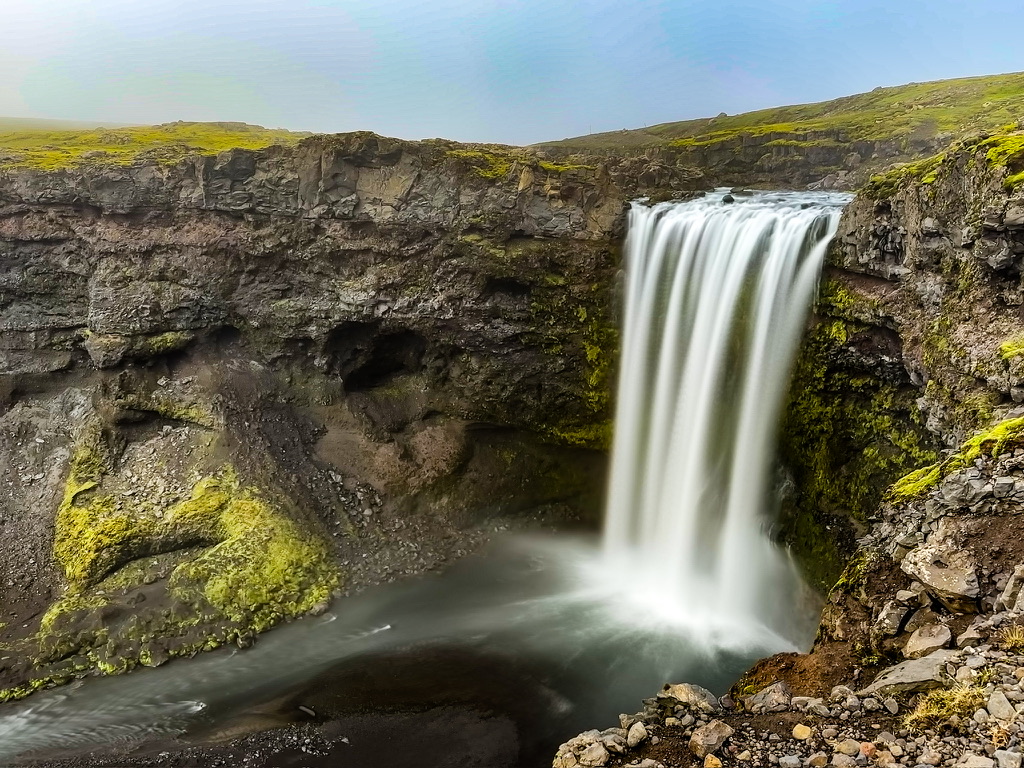
This is not just a walk through beautiful scenery, though. It’s a journey through Iceland’s raw geological story. With hot springs, snowfields, obsidian lava, mossy valleys, and over two dozen waterfalls packed into just a few days, it feels like backpacking across multiple worlds. It’s demanding at times, rugged and breathtaking nearly always, and never boring.
I completed this trek in four days, camping each night while my trekking partner stayed in huts. That gave me a firsthand look at what both experiences offer, and I’ll be sharing insights for both styles of trekking throughout this guide. If you’re looking for an unforgettable, self-powered way to see Iceland, this route delivers.

Planning Your Trek
When to Go
The hiking season in the Icelandic Highlands is short. Trails and hut systems typically open in late June and close by mid-September, depending on snow conditions. July and August are the most reliable months for good trail access and regular bus service. Be prepared for any kind of weather—rain, wind, sun, and snow can all show up on the same day. My trek started on July 6th and ended on July 9th, and we had nearly as perfect of a weather window as you could have asked for.
Which Direction to Hike
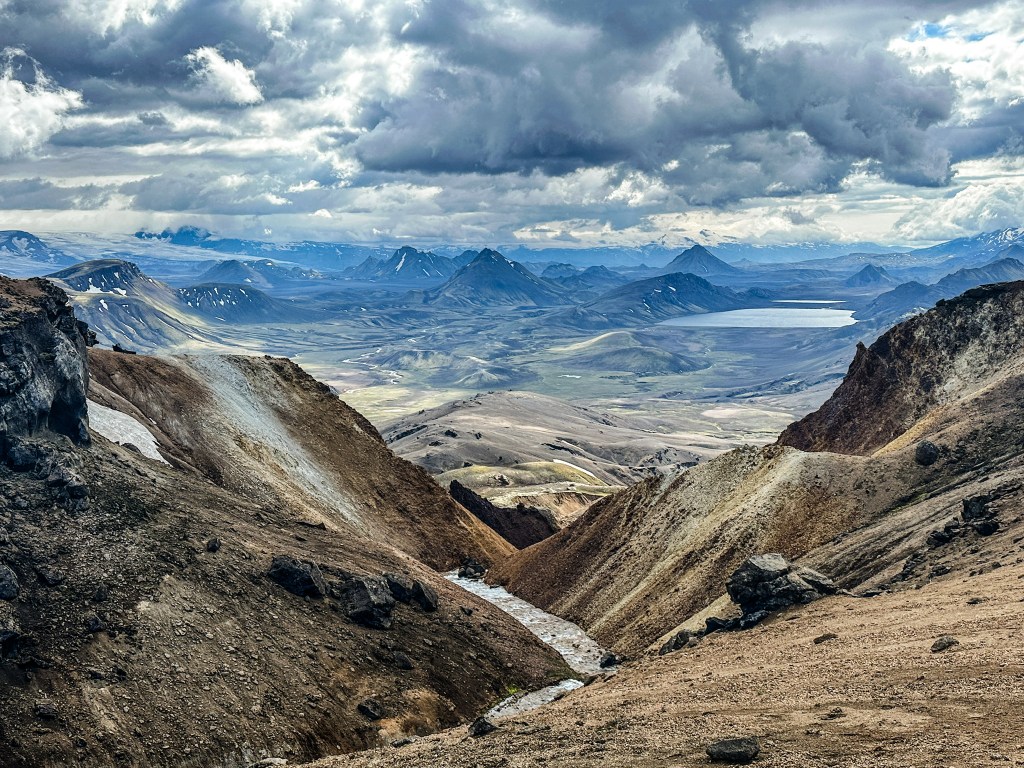
Most people hike north to south, from Landmannalaugar to Skógafoss. This direction tends to offer a better progression in scenery, saves the most waterfall-heavy section for the grand finale, and works better with the bus schedules. It also puts the sun at your back (on the rare days it shows up), and generally follows the prevailing wind. If you’re only hiking the Laugavegur, this direction also gives you an elevation profile that trends downhill.
Field Note: adding Fimmvörðuháls tacks nearly 3000ft of vertical gain onto your final day of hiking, and over 3600ft of descent.
Another reason most people hike in this direction is because this is the direction you are required to book huts in, and most people, it seems, prefer to stay in huts. If you are one of those people, your only option is the north-to-south route. If you’re tent camping, like I was, you can hike in whichever direction you please, if you can work the logistics out. My hiking partner and I chose the traditional north-to-south route since she would be staying in huts while I camped.

Permits & Reservations
You don’t need a permit to hike either trail, but camping is only allowed at designated sites near each hut. If you want to stay in huts, book early—some sell out months in advance, especially on the Laugavegur. The Iceland Touring Association (Ferðafélag Íslands or FI) manages most of the huts and the booking system.
Field Note: Huts were completely sold out when I first attempted to book our trip in November, hence my decision to camp instead. However, my hiking partner Amanda chose to keep checking, and was eventually able to secure a hut space at each of our stops. I recommend getting on the wait list at the earliest possible time, but to have a backup plan (camping) in case you don't get a hut.

Trail Conditions & Safety
The trails are well-marked and maintained, but don’t let that lull you into underestimating them. Weather can change rapidly, and visibility can drop to near zero. River crossings are common (some bridged, some not), and snowfields can linger into mid-summer. A GPS map or app like Gaia GPS or AllTrails is helpful but should be backed up with basic navigation skills. I did not personally find that I needed to carry either a field guide or a paper map, but base this on your own comfort level.
Field Note: For a detailed trekking guide, I recommend the Knife Edge Guide. For daily trail navigation and tracking, I use GaiaGPS.
During the second week of July when we hiked, river crossings were completely manageable, but I have heard of them being treacherous during times of heavy rain or rapid snow-melt. The most treacherous conditions we encountered on the entire hike were on the Fimmvörðuháls trail on our final day, which I’ll go into more detail about in a later section.

Solo or Guided?
This route can be done self-guided without much trouble if you have backpacking experience and come prepared. There are dozens of guided options available, but I found going self-supported offered more flexibility and solitude. I knew from past experience that I do not enjoy guided hikes in large groups, where my pace, my gear, and even my snack stops are dictated by the group rather than my individual needs and desires. The biggest downfall of a self-guided hike is that you are responsible for all of your own logistics and planning. You also don’t get the benefit of having local expertise and knowledge along the way. I chose self-guided because it suites my personality and travel style.

Camping vs. Huts: What to Expect
One of the first decisions you’ll need to make when planning this trek is whether to camp or stay in the huts along the route. If you don’t snag hut space, the decision may be made for you. I chose to camp every night, while my trekking partner booked huts, giving us a unique side-by-side comparison of what each experience offers. Spoiler: there’s no wrong answer—but there are trade-offs to consider.
Camping: More Freedom, More Exposure
Camping gave me more flexibility and independence, plus the chance to fully immerse myself in the landscape. There’s something deeply satisfying about crawling into your tent with the sound of wind or distant rivers around you, especially under Iceland’s long twilight skies.
That said, Iceland isn’t always kind to tents. Wind can be brutal, and rain is almost a guarantee at some point. Campsites are located next to the huts, and while they usually offer access to toilets, sinks, and sometimes cooking shelters, the tent pads themselves range from excellent to rocky and exposed. A sturdy, storm-worthy tent is essential, and don’t skimp on guylines or stakes. I’ll go into more detail about the specific gear I chose in a later section.

Huts: More Comfort, Less Flexibility
The huts, managed by Ferðafélag Íslands (FI), are clean, warm, and well-organized. Each has communal bunks, a kitchen area with gas stoves, and sheltered space to dry out gear. For my trekking partner, it meant dry clothes, easy cooking, and guaranteed rest even if the weather was raging outside.
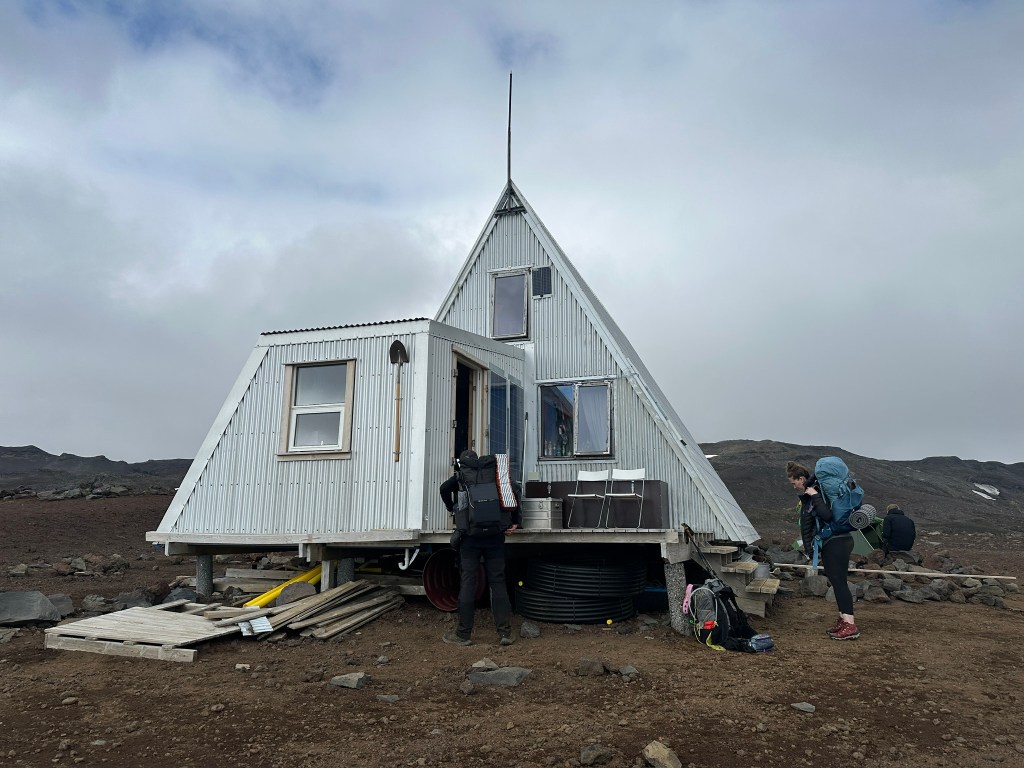
The downside? Huts must be booked well in advance—often months out—and they lock you into a rigid itinerary. You’re also sharing space with dozens of other hikers, which can be cozy or crowded depending on your social battery. The “bunks” are just wooden platforms that you place your sleeping pad on, so you need to be prepared for the possibility of being elbow-to-elbow with a snoring stranger. This was the turn-off for me, and one of the major reasons I ultimately decided to tent camp. I’ll take my chances with the wind to have a private sleeping space and not have to smell strangers’ farts.
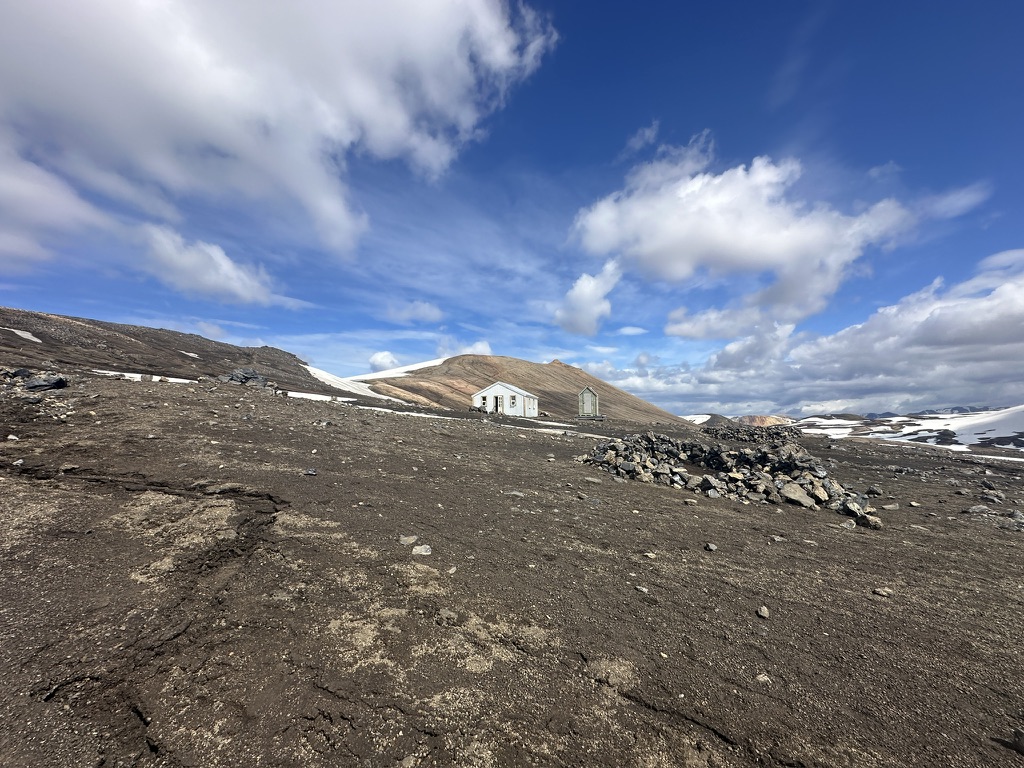
Field Note: There are a few huts and campgrounds along the route that are managed by independent companies not associated with FI. In Thorsmork National Park, you have options of two FI-managed huts/camping areas; Þórsmörk-Langidalur Hut and Basar, along with a Volcano Huts managed hut, which is considered to be a little more upscale and has a few more amenities than the others, but is further off trail. Utivist operates a hut along the Fimmvörðuháls Trail in addition to the FI operated hut.
Cost Comparison
Camping costs around 3,200 ISK per night (roughly $25USD), while the main Laugavegur huts run closer to 15,800 ISK (about $123 USD) per night for the 2025 season. If you’re on a tight budget or prefer solitude, camping wins. If you value warmth and comfort after a wet day, the huts are worth every krona.
Key Takeaways from Doing Both (Sort of):
- Weather tolerance matters. If you’re not comfortable sleeping in wet or windy conditions, go with huts.
- Campers should come self-contained. Don’t rely on the huts for shelter or amenities outside the shared toilets and sinks.
- Hut-stayers should pack earplugs Snoring, shuffling gear, late-comers, and early risers can all interrupt your sleep.
- Campers, pack a sleep mask! Somehow, in all of my prep, I did not read this simple piece of advice. In July, it never gets fully dark.
- We met a few people mixing both. Some camped most nights but opted for hut space if it was available. This hybrid approach can be ideal, but shouldn’t be counted on as an option because huts are usually booked up.
Transportation Logistics
Getting to and from the Laugavegur and Fimmvörðuháls trails takes some coordination, but Iceland makes it surprisingly doable—even if you’re running on airport snacks, adrenaline, and very little sleep.
I landed at Keflavík Airport at 6:20am after an overnight flight from Detroit and caught a Flybus to the Reykjavík city bus terminal. I didn’t pre-book this leg—just grabbed a ticket at the airport, which was quick and easy. At the terminal, I wandered into the attached convenience store/pizza restaurant in search of food. I inhaled a pepperoni slice, then was not-so-gently encouraged to leave after dozing off at the table. In my defense, I’d been awake for over 24 hours. I protested that I was a paying customer waiting on friends, but to no avail. I was shooed out like a stray dog. Not the warmest welcome to Iceland—but fair enough.
Once my trekking partners arrived, we sorted our luggage, packed our backpacking gear, and stored extra items in the luggage lockers at the terminal. Then we walked to City Hall to catch the Trex Hiker Bus, which departed at 12:30pm and arrived at Landmannalaugar around 4:30pm. I had booked a round-trip ticket with Trex before leaving the U.S., including the return ride from Skógar to the Reykjavík city bus terminal several days later.
Field note: it was a short, easy walk between the city bus terminal and the City Hall bus stop.
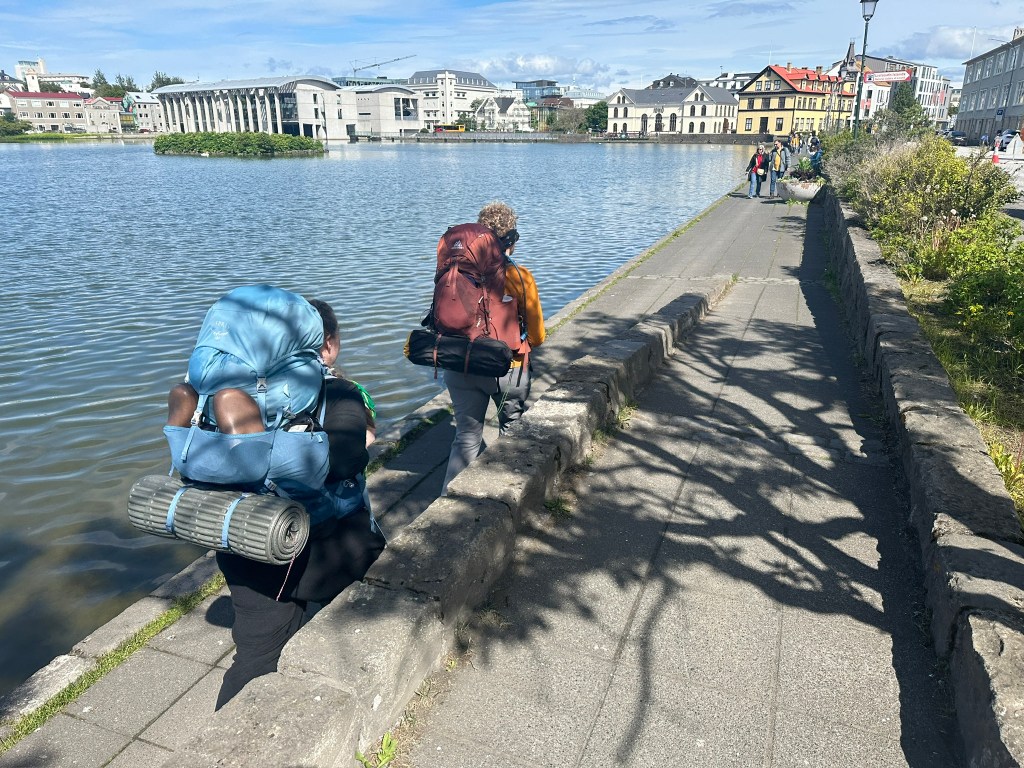
The ride itself was part of the adventure. I was surprised by how quickly we left the city behind—soon we were passing green pastures dotted with small sheep and Icelandic horses. We stopped briefly at a small market for last-minute supplies, where I grabbed blueberries and some Icelandic cheese to round out my food bag. After that, things got bumpy—in the best way. We rumbled down narrow dirt roads, squealed to the side for passing 4x4s and buses, crossed wide rivers, and watched steaming hillsides and lava fields roll by as we climbed into the highlands. Eventually, we pulled into the vibrant, bustling Landmannalaugar campsite.
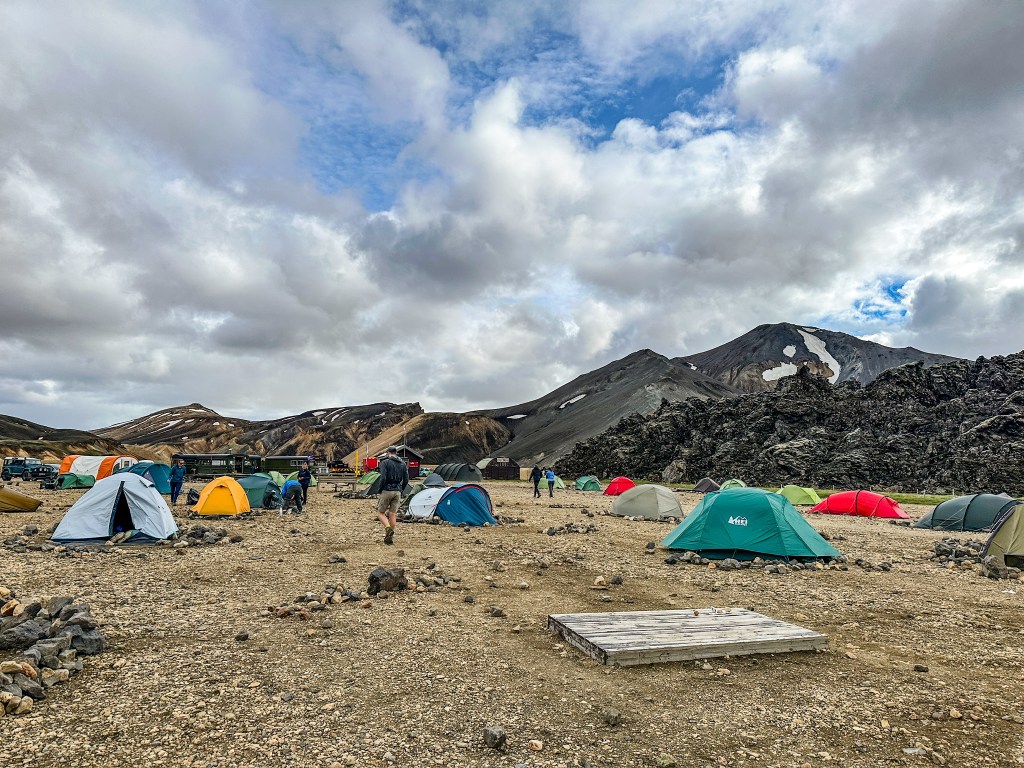
The outbound trip went smoothly, but the return leg was another story. Our bus picked us up at the Skógar campsite at 10:20am the day after we finished the hike, just as planned. But then came a six-hour layover (which turned into eight, thanks to a delay) in a tiny town with few amenities. We passed the time by eating, eating again, and wandering a geothermal museum and a gift shop.
The real problem came when we finally reached Reykjavík—well after the luggage lockers had closed for the night. Thankfully, I had arranged for my luggage to be delivered to our hotel that evening. That $15 investment saved me from a logistical disaster: the lockers wouldn’t reopen until after my scheduled flight back to the U.S. departed the next morning.
Crisis averted, we walked about 15 minutes from the terminal to our hotel, then took an Uber to the airport the following morning for our flights home.
Tips for Streamlining Your Transit:
- Book your Landmannalaugar transport in advance. Trex, Reykjavik Excursions, and SBA all run highland bus routes.
- Use luggage storage or delivery wisely. If you’re returning after hours or leaving early, luggage delivery can be a game-changer.
- Double-check return bus layovers. Make sure you have some audiobooks or podcasts downloaded on your phone, pack extra snacks, and bring a good attitude.
- City navigation is easy on foot. Reykjavík is compact and walkable, and getting between bus stops, hotels, and attractions is straightforward.
Gear: What Worked (and What I’d Change)
Trekking in Iceland isn’t quite like backpacking anywhere else. The terrain is rugged, the weather shifts without warning, and you might experience wind, rain, fog, and sun—all in the same hour. I knew I needed gear that could handle wild swings in temperature and weather, while still being compact enough for bus travel and comfortable enough to live in for four days straight.
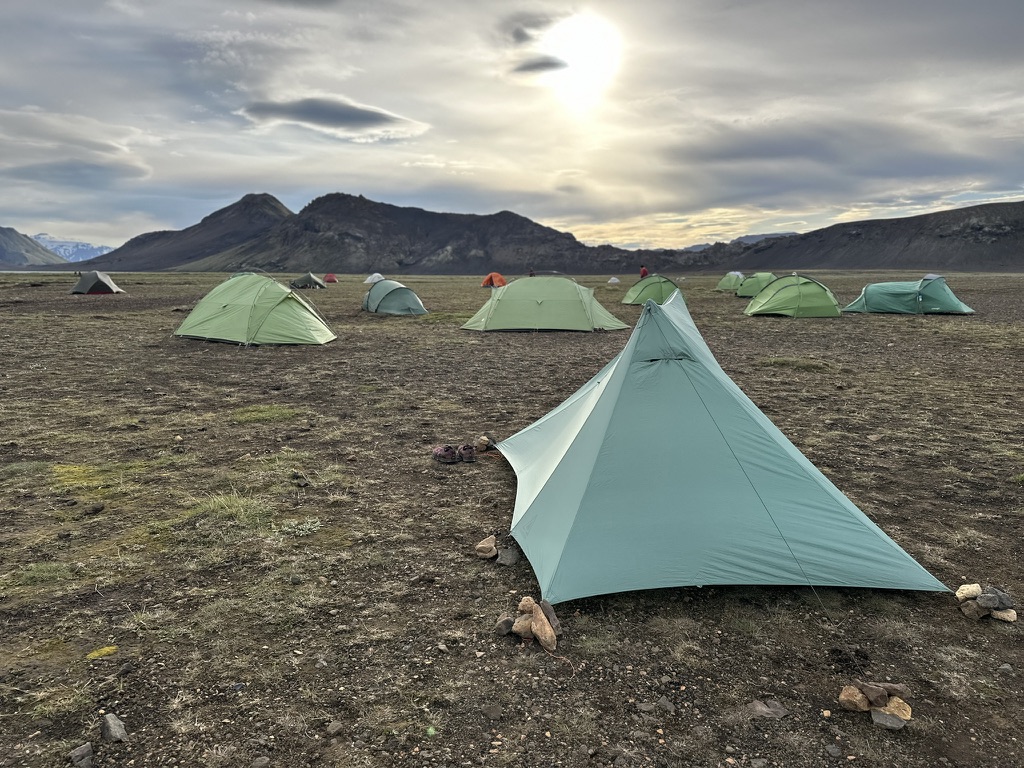
My Base Weight: 21.93 lbs
Not ultralight, but not excessive either. I wasn’t aiming to shave every ounce. I was aiming to be comfortable, warm, dry, and fed. Mission accomplished.
My Tent & Sleep System
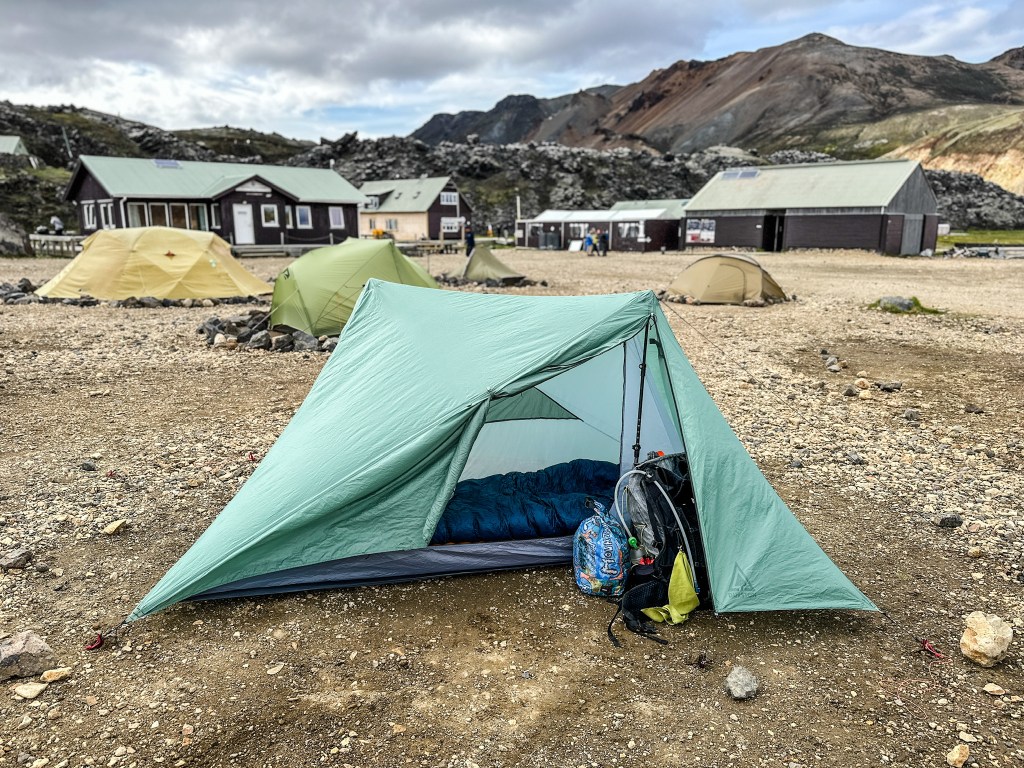
- Tent: I brought the Durston X-Mid 1P Solid, and I’d bring it again in a heartbeat. It was easy to pitch in wind, kept the rain out, and felt solid in exposed highland campsites.
- Sleep setup: A Jacks R Better 0° quilt, Nemo Tensor pad, and Therm-a-Rest pillow. Cozy, warm, and totally necessary. Even in August, overnight temps dipped near freezing. No regrets carrying a warmer quilt.
Field Note: Most guidance for this trek recommends an expedition weight tent, and this is what you'll see a lot of the guided trips using. If you plan to use an ultralight tent, or a free-standing tent like I used, make sure it is up to the task and that you are highly proficient in setup in adverse conditions. There are campsites where stakes wont work, either due to bare rock or soft, sandy soil. I practiced pitching my Durston without stakes and with extra guylines and supports many times at home to perfect the technique.
Clothing Highlights
- Hiking clothes: I hiked each day in my usual uniform: Lightheart Gear Backpacking Dress and Avia compression shorts (Columbia Weekend Adventure Leggings on colder days). My Lightheart Gear fleece dress was the MVP layering item, as usual, and I brought my Eddie Bauer down puffy, but rarely used it except in camp.
- Rain Gear: I brought an Eddie Bauer BC Uplift rain jacket and Lightheart Gear rain wrap, but I only used them toward the end of the final day as we encountered a drenching, misting rain descending along the banks of the Skoga River. Otherwise, we had near perfect weather the entire trip.
- Shoes: Altra Lone Peak 5s for hiking and my trusty Lisa Frank Crocs for camp. After summiting Kilimanjaro the year prior in Altras, I knew they would be up to the rocky climbs, and would dry out reasonably well overnight if they got wet. If you’ve been following along for a while, you know I’m a stickler about camp shoes, so naturally I brought Crocs. I used them in camp and for most water crossings
- Base layers: I packed both REI and Duluth synthetic long sleeve layers and Smartwool leggings, plus a Branwyn bra and a pair of micromodal MeUndies. Having options for both hiking and sleeping every day was key.
- Socks: I brought two pair of Darn Tough Vermont hiking socks; one for sleeping, one for hiking.
- Other clothing items: I brought gloves and glove liners, a swimsuit for the hot springs at Landmannalauger, and a Buff Headband that I used more as a sleep mask than anything else.
Field Note: Bring a sleep mask. Yes, I made do without one. But trust me, I would have greatly preferred a soft, dry sleep mask over my sweaty, stinky, thin Buff to help darken the midnight daylight.

Kitchen & Water
- Stove: The MSR PocketRocket 2 paired with a TOAKS 750ml pot made a solid lightweight setup. Most days, however, my trekking partner Amanda boiled water for both of us in the huts.
- Water: I used a mix of Nalgenes and a CNOC Vesica soft bottle. There is no need to bring a water filter; all of the huts and campgrounds have potable water.
- Food: I used a Mountain Blaze food bag to keep things tidy and contained, and carried my favorite Sea to Summit Spork for eating. There are no bears or other critters to worry about in Iceland, so no need to hang or store food.
- Resupply: I brought most of my food from the U.S. and supplemented with Icelandic cheese and fruit from a roadside stop. I bought fuel and a lighter after arriving at the city bus terminal, and I supplemented my packed meals with restaurant meals along the way.
Field Note: There is a small camp store at the city bus terminal in Reykjavik where you can rent or buy last minute gear items. I wouldn't rely on this tiny shop for any major gear needs, but it is more than sufficient for fuel. They also had a variety of backpacking meals available for purchase. The Mountain Mall at Landmannalauger has an even greater variety of trail meals, snacks, and essentials available for purchase (and beer!) Additionally, Altavatn, Thorsmork National Park (Volcano Huts or Basar), and Skogar all had restaurants, and Baldvinsskáli had small necessities and backpacking meals available for purchase as well. Every hut also had a "hiker box" full of half-used fuel cans, lighters, and unused food items. Basically, don't panic if you forgot something. You can get it there.

Hygiene
I didn’t skimp here—after four days of hiking, sweating, and sleeping outside, staying (relatively) fresh made a huge difference:
- DryFoxCo small towel—fast-drying and great for campsite wash-ups or drying off after a hot springs dip
- Dr. Bronners and a travel size loofah for camp showers
- Kula Cloth for on-trail bathroom needs.
- Lume deodorant, wet wipes, and Body Glide were worth every ounce.

Electronics
I carried two power banks (probably overkill), my iPhone 14, a Nitecore headlamp, and charging cords. I never ran out of power, and I had offline maps saved in Gaia, which helped with peace of mind.
Other Essentials
- Leki trekking poles were lifesavers on slick, steep descents—especially coming down Fimmvörðuháls.
- Sunday Afternoons sunhat, Zenni sunglasses, and a Deuce of Spades trowel rounded out the kit.

Would I change anything? Maybe shave down my electronics and consolidate toiletries, but overall, this kit kept me dry, warm, and prepared. Iceland’s weather tested it—and it passed. Find my full gear list HERE.
Food: Dehydrated Meals & Alpine Indulgence
Icelandic trekking is a balancing act between roughing it and enjoying the comforts you can find—especially when those comforts include warm meals and cold beer after a long day. I packed light but made room for a few small luxuries, and I leaned on hut restaurants to supplement what I’d brought with me whenever possible.
My Meal Strategy
My food plan was a mix of:
- Dehydrated meals (mostly familiar brands I brought with me from the US; I did not want any surprises of digestive upset or disliking taste/texture)
- Trail snacks (bars, jerky, nut butter, dried fruit, and the fresh fruit and cheese I’d bought on the way to the trail)
- Hut or restaurant meals when available
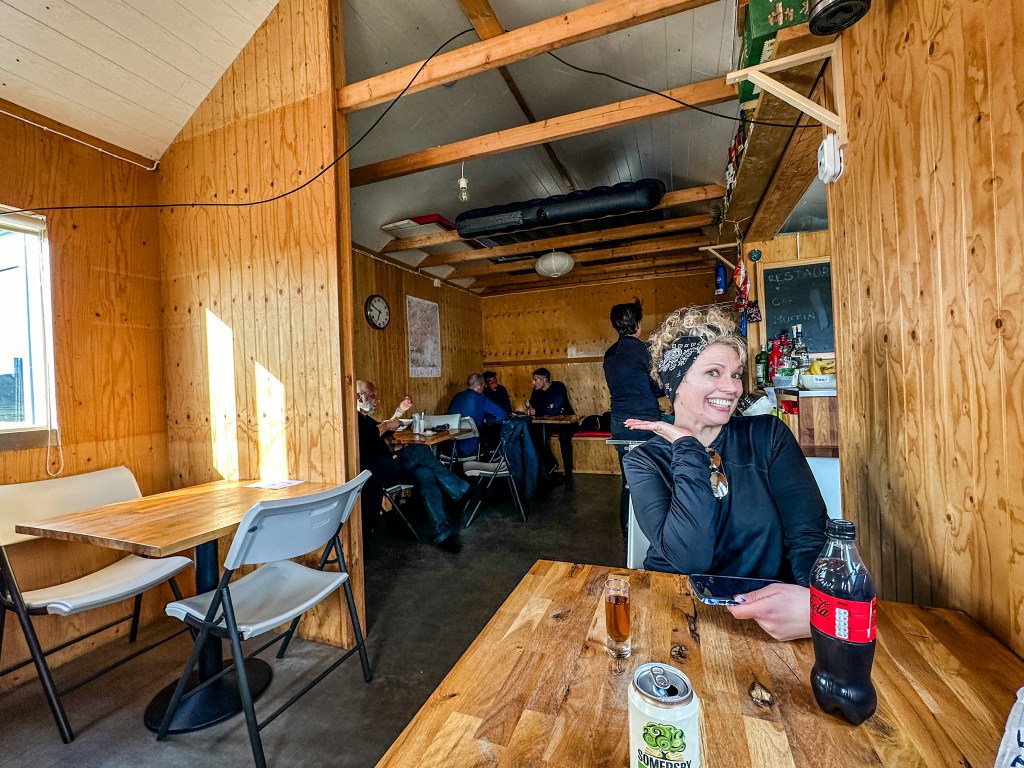
- Beer—You’re not gonna believe this, but there was beer available for purchase at every single campsite. And yes, I did indulge at all of them. I had to confirm, for this blog, ya know?

Daily Breakdown
- Night 1 (Landmannalaugar): A hot dehydrated dinner followed by celebratory beers while soaking in the hot springs. Nothing like a six-pack of Icelandic lager to kick things off.
- Day 1: Dehydrated breakfast, all-day snacking, and a real meal at the Álftavatn hut. The food there was hearty and filling, if expensive. 10/10 would recommend, despite the price tag.
- Day 2: Basic trail routine—dehydrated breakfast, snacks while hiking, dehydrated dinner at camp in Emstrur. Simple, satisfying, and easy to prep in the wind.
- Day 3: Dehydrated breakfast, the usual daytime grazing, and another welcome restaurant dinner—this time at the Básar campground. Hot food felt extra good after river crossings and steep descents.
- Day 4: Breakfast on trail, snacks en route, then a shared dehydrated meal during a long warm-up break at Baldvinsskáli. We followed that up with dinner at Skógar’s restaurant—right near the waterfall. Even though the restaurant was mostly closed by the time we arrived (nearly 11pm), we were able to eat our fill of hot mushroom soup and warm bread. It felt like a reward for all our hard work!
- Day 5: Full transition back to civilization: breakfast at the restaurant at Skógar, lunch during a bus layover, and a final dinner back in Reykjavík at the hotel.
What I’d Do Again
- Bring dehydrated meals: Lightweight, no cleanup, and reliable when the weather’s miserable.
- Snack all day: I never stopped long for lunch, so having plenty of high-calorie, salty snacks was key.
- Splurge at huts when possible: The hot meals were pricey, sure—but they were worth it for morale, warmth, and feeling human again. Plus, I didn’t have to carry them on my back.
- Drink the beer.

Itinerary: Laugavegur + Fimmvörðuháls Trek (July 2024)
Total Distance: 50.3 miles
Total Ascent (actual): 6,714 ft
(Note: Guidebooks suggest closer to 9,700 ft—it felt like that too. My actual mileage and ascent as tracked in Gaia is represented in this blog.)
This itinerary is based on my actual 2024 experience, including bus schedules, campsites, and costs. These prices reflect what I paid in 2024, but costs may change in 2025 and future seasons—always double check current info before your hike.
Day 0 – July 5: Reykjavik to Landmannalaugar
- Flew into Reykjavik and caught the Trex Hiker Bus from City Hall
- Departure: 12:30 PM
- Cost: $185 USD round trip
- Camped at Landmannalaugar – $21 USD
- Relaxed in the hot springs that evening (bring a swimsuit!)
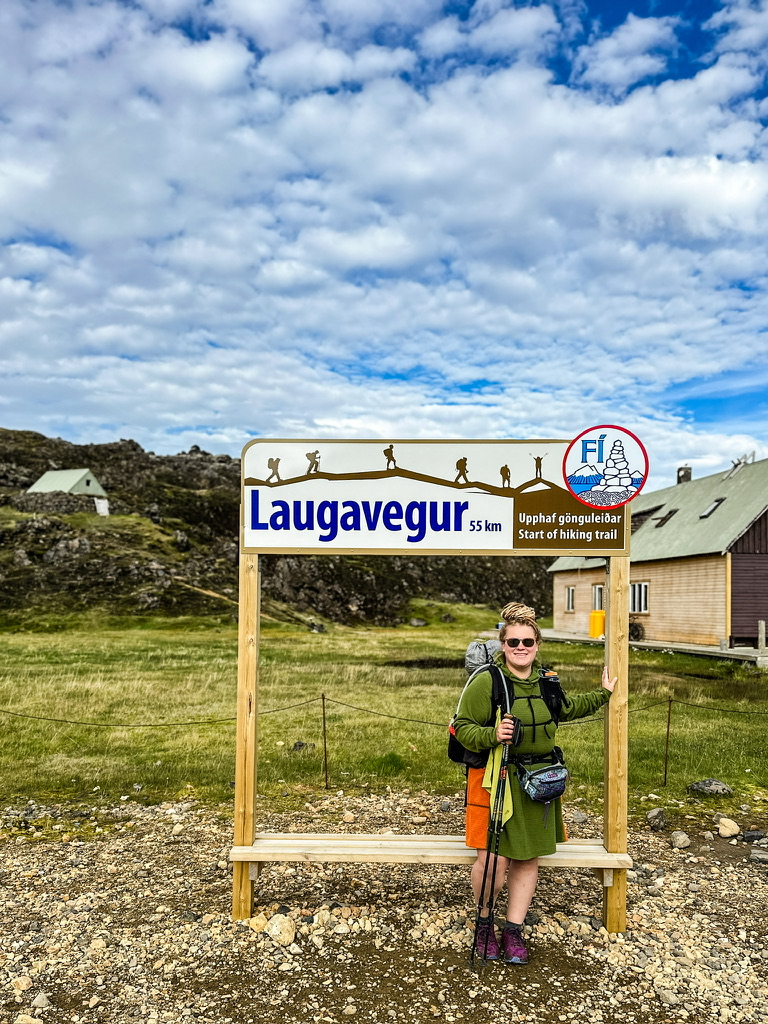
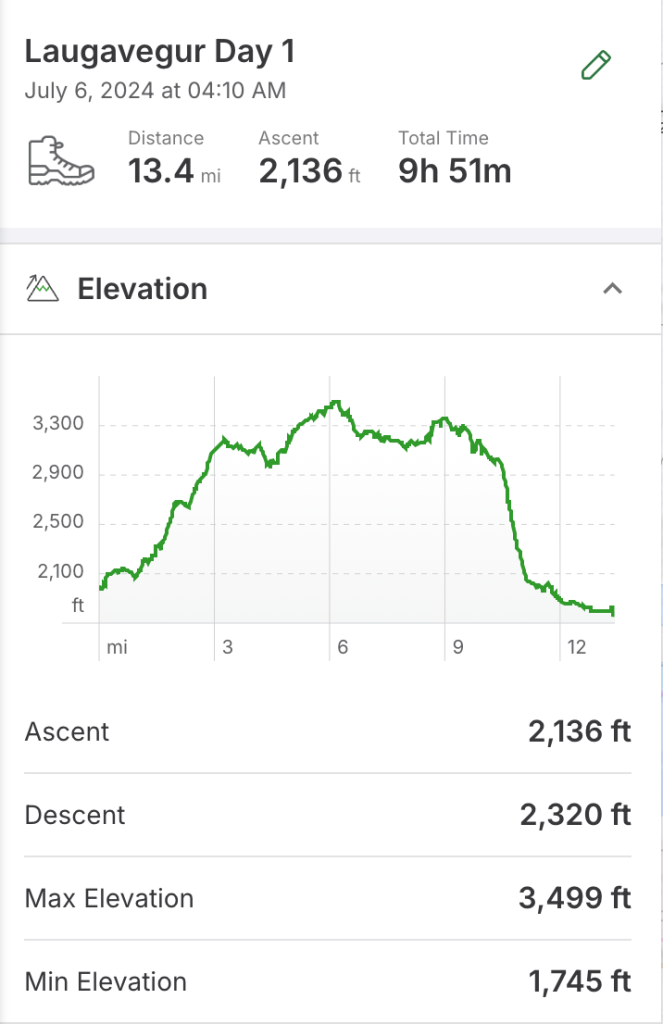
Day 1 – July 6: Landmannalaugar to Álftavatn
- Miles hiked: 12.43
- Ascent: 2,118 ft
- Camp: Álftavatn — $21 USD
- There’s a small restaurant at the hut here; meals cost around $30–40.
- I had a dehydrated breakfast and lunch snacks, then treated myself to a hot dinner.

Day 2 – July 7: Álftavatn to Emstrur
- Miles hiked: 9.83
- Ascent: 548 ft
- Camp: Emstrur — $21 USD
- This was a gentler day physically, with plenty of river views and soft terrain underfoot, until the end which was a slip-n-slide of loose rock down a very steep slope. Amanda and I both agreed this was one of the worst parts of the entire Laugavegur trail!


Day 3 – July 8: Emstrur to Básar (Þórsmörk area
- Miles hiked: 11.55
- Ascent: 1,113 ft
- Camp: Básar — $17 USD
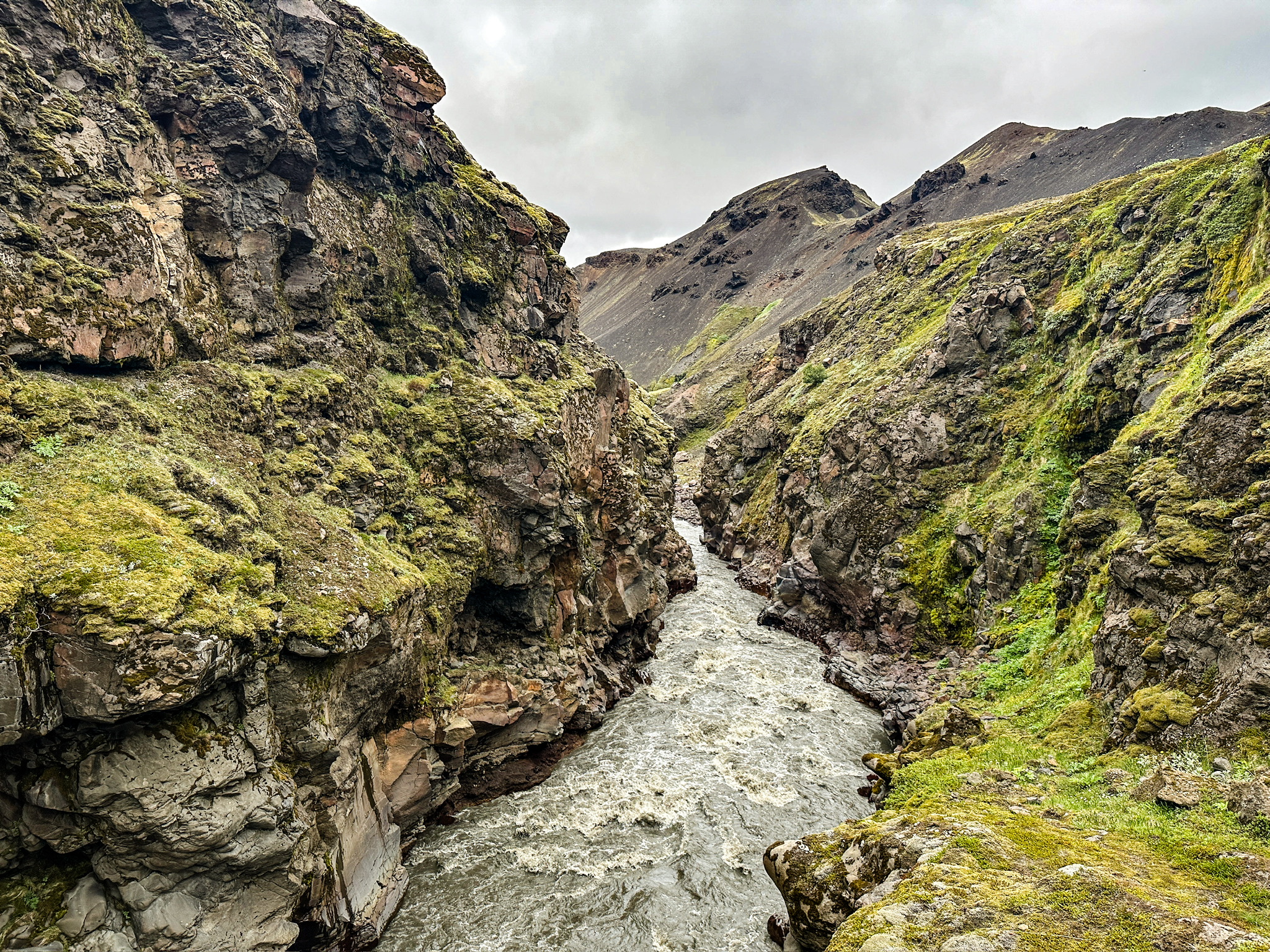
- This day included some great canyon views and a mix of hills and open lava fields, culminating in a river crossing into the lush green of Thorsmork National Park.


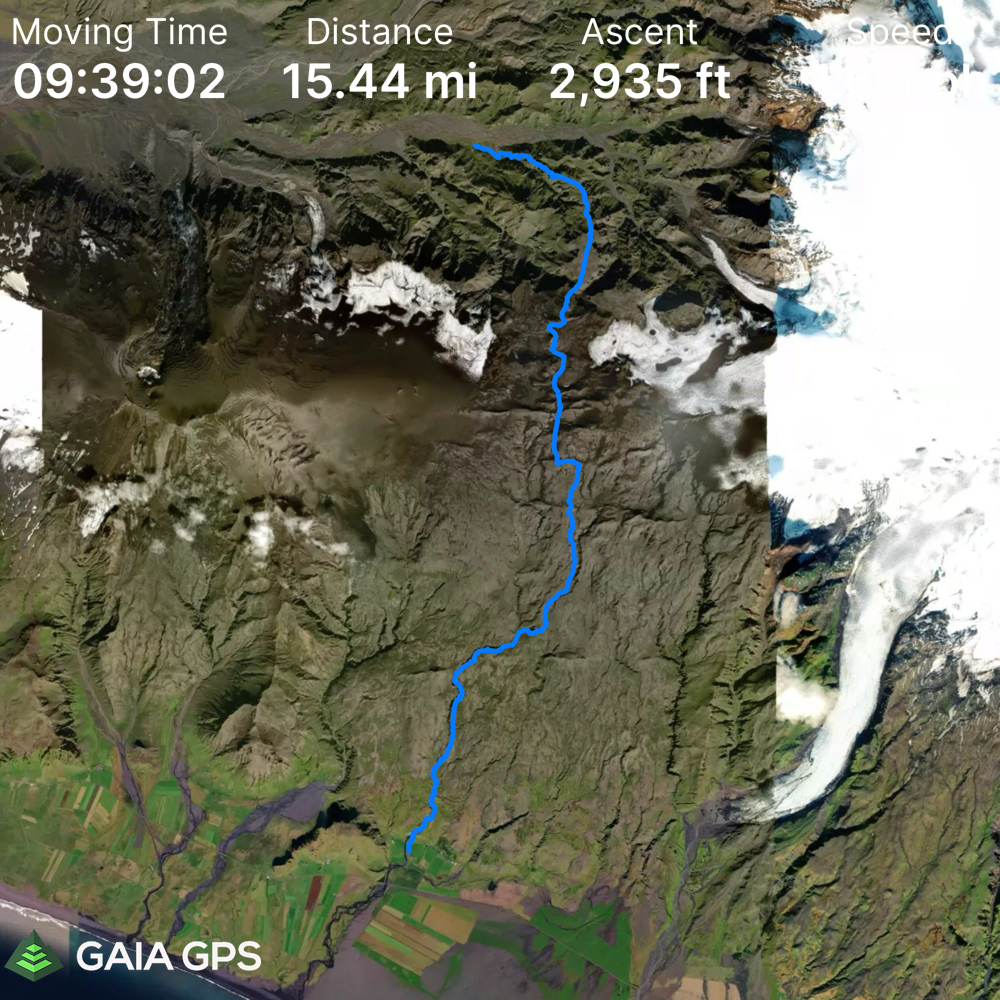
Day 4 – July 9: Básar to Skógafoss (via Fimmvörðuháls Trail)
- Miles hiked: 15.44
- Ascent: 2,935 ft
- Camp: Skógafoss — $24 USD
- We powered through the pass, stopped for a long warm-up and shared a dehydrated meal at Baldvinsskáli, then pushed through wind and rain to Skógafoss. This was the most physically, mentally, and emotionally demanding day of the trip, including notoriously sketchy sections such as the Cat’s Spine, crossing snow fields at the base of active volcanoes, and navigating a significant and treacherous washout.
- Crashed at the Skógafoss campground after dinner and celebratory beers at Hotel Skógafoss.
Field Note: There is no hut at Skogafoss. Since we had planned to spend the last night here, Amanda did carry a tent the entire way specifically for this night, even though she stayed in huts the majority of the time.


Day 5 – July 10: Return to Reykjavik
- Took the Trex bus back to the city
- Departure: 10:15am
- Layover: 6hrs (ours was longer due to a delay)
- Stayed at Hotel Holt, where I ate a light dinner and had a drink at the hotel bar
- First real bed after five nights in the dirt.
- Amanda and I took an Uber to the airport the following morning
This trek was challenging, breathtaking, occasionally wet and cold, often windy, and absolutely worth every mile. From geothermal springs to black sand deserts, glacial passes to thundering waterfalls, Iceland served up some of the most dramatic and diverse landscapes I’ve ever walked through.

I’m not a fast hiker, and I don’t travel ultralight, but this trail reminded me that there’s no one right way to hike. Just your way. And mine includes good food, warm layers, and stopping often to soak it all in.
If you’re dreaming about the Laugavegur and Fimmvörðuháls, let this be your sign: it’s doable, it’s stunning, and it’s waiting for you. Just don’t forget your rain jacket and a little grit.

Just here for the scenery, or simply prefer video content? Check out the day-by-day video of this hike below!
 Adventure Like A Girl
Leave a comment