
When most people think of West Virginia, they picture rolling mountains, winding country roads, and maybe a John Denver song or two. What you probably don’t expect to find tucked away in the middle of all that is a telescope taller than the Statue of Liberty, and so sensitive that cell phones, Wi-Fi, and even microwaves are banned for miles around. However, this is exactly what you will find in Green Bank West Virginia, also known as “America’s Quietest Town.” Tucked deep into the surrounding mountains of Monongahela National Forest, this tiny rural community, boasting a population of 51 (2023 census) is part of the National Radio Quiet Zone, a 13,000 square mile area in West Virginia and Virginia where everyday technology and electronics are banned or restricted so scientists can listen to the universe without interference.
I made a pit stop in Green Bank to visit the Green Bank Observatory, thinking I’d take a quick walk to check it out. My visit quickly turned into a half day adventure discovering one of the most interesting “roadside attractions” in the country.

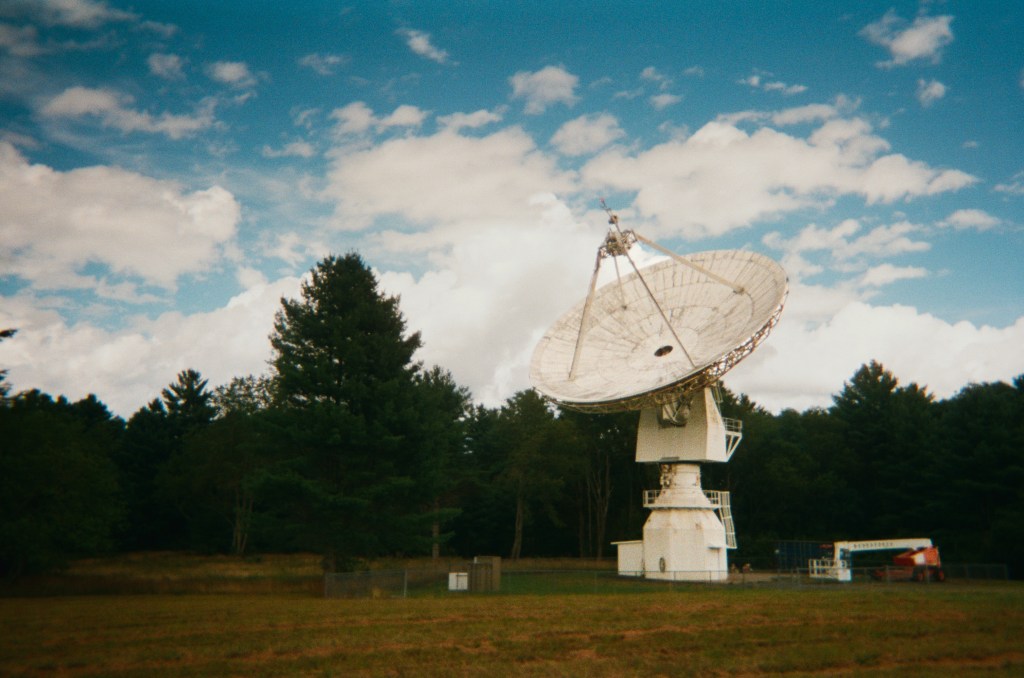
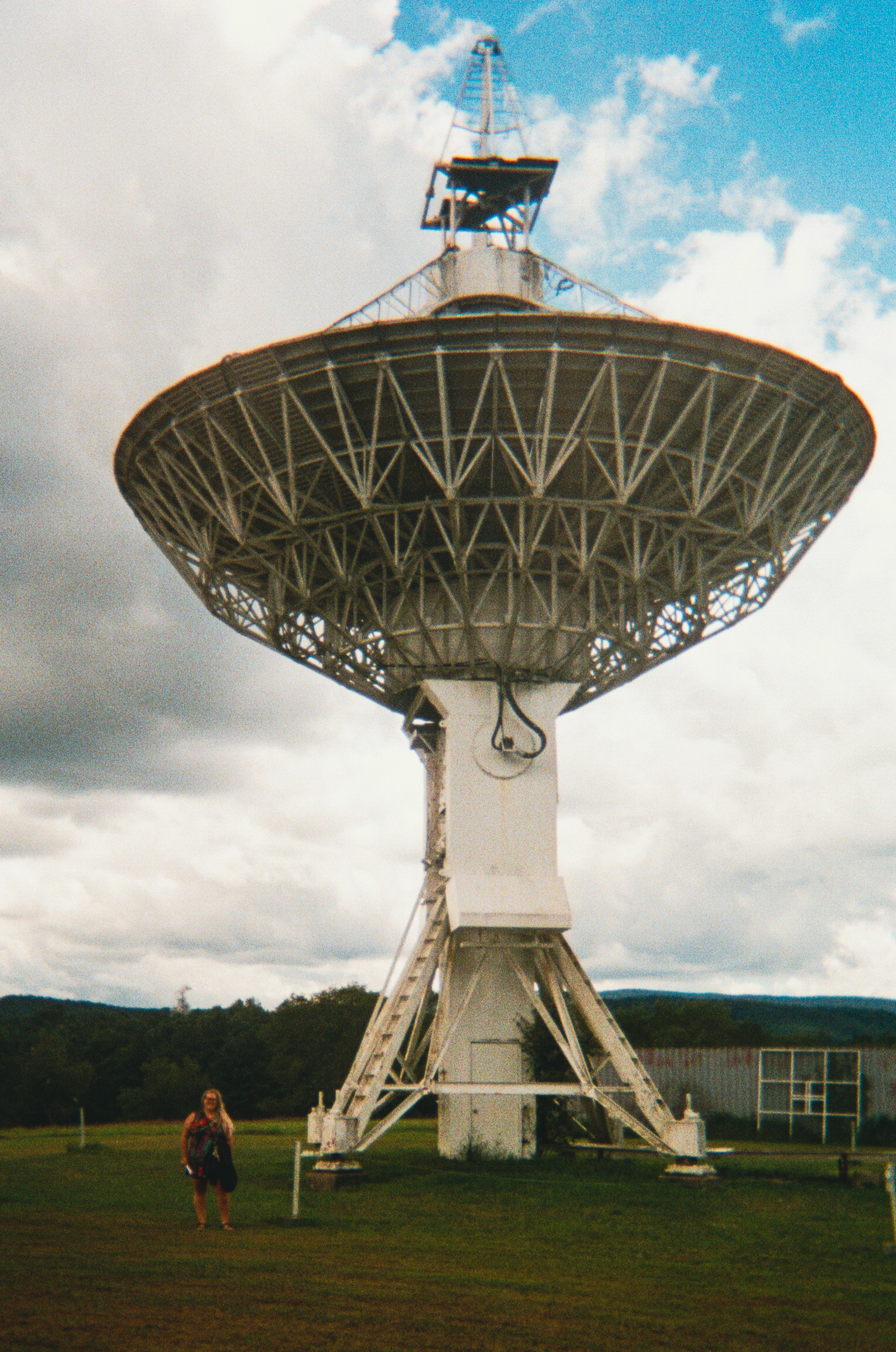
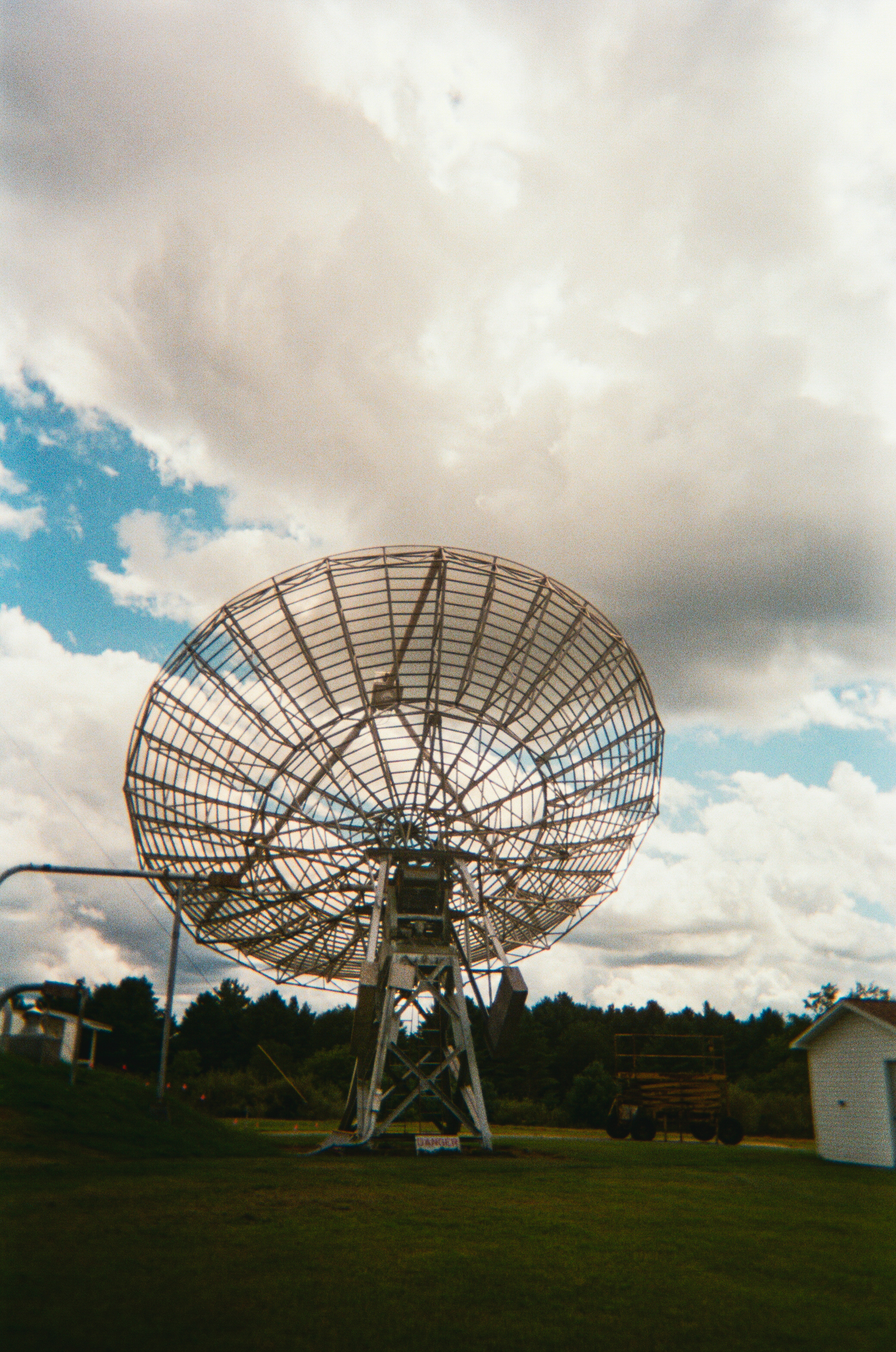
Upon arriving at the Green Bank Observatory, the first thing you’ll likely notice are the various telescopes and other scientific discovery objects just kind of lying about on the lawn. Some of these are on the National Register of Historic Places, and this area is one of the only places on campus where you can take photos with your cell phone (it should still be in airplane mode with bluetooth and wifi turned OFF).
Next you’ll probably spot a large brick, concrete, and glass building. This building is the Science Center, and it’s where I recommend starting out. Inside, you’ll find a small gift shop, a cafe, and all the information you need to enjoy your visit. You can also purchase a disposable camera here if, like me, you left home without your trusty 35mm film camera and only have a cell phone.
Field note: digital photography of any kind is strictly off limits in the restricted zone. If you are doing a tour of any kind, you will be asked to leave your cell phones, smart watches, fitness trackers, digital cameras, and any other devices that emit or transmit radio waves either in your car or at the Science Center, and they should be powered off upon arrival.
At the Science Center, I learned that we had two choices for exploring deeper into the campus of the observatory: a bus tour for $10 or a self-guided walking tour using the free handouts in a bin outside the science center. Being hikers, we naturally chose the walking tour. Levon and I looked out at the enormous Green Bank Telescope, decided it didn’t look that far, and figured we’d walk out, snap a few photos, and be back in thirty minutes.
Boy were we wrong.

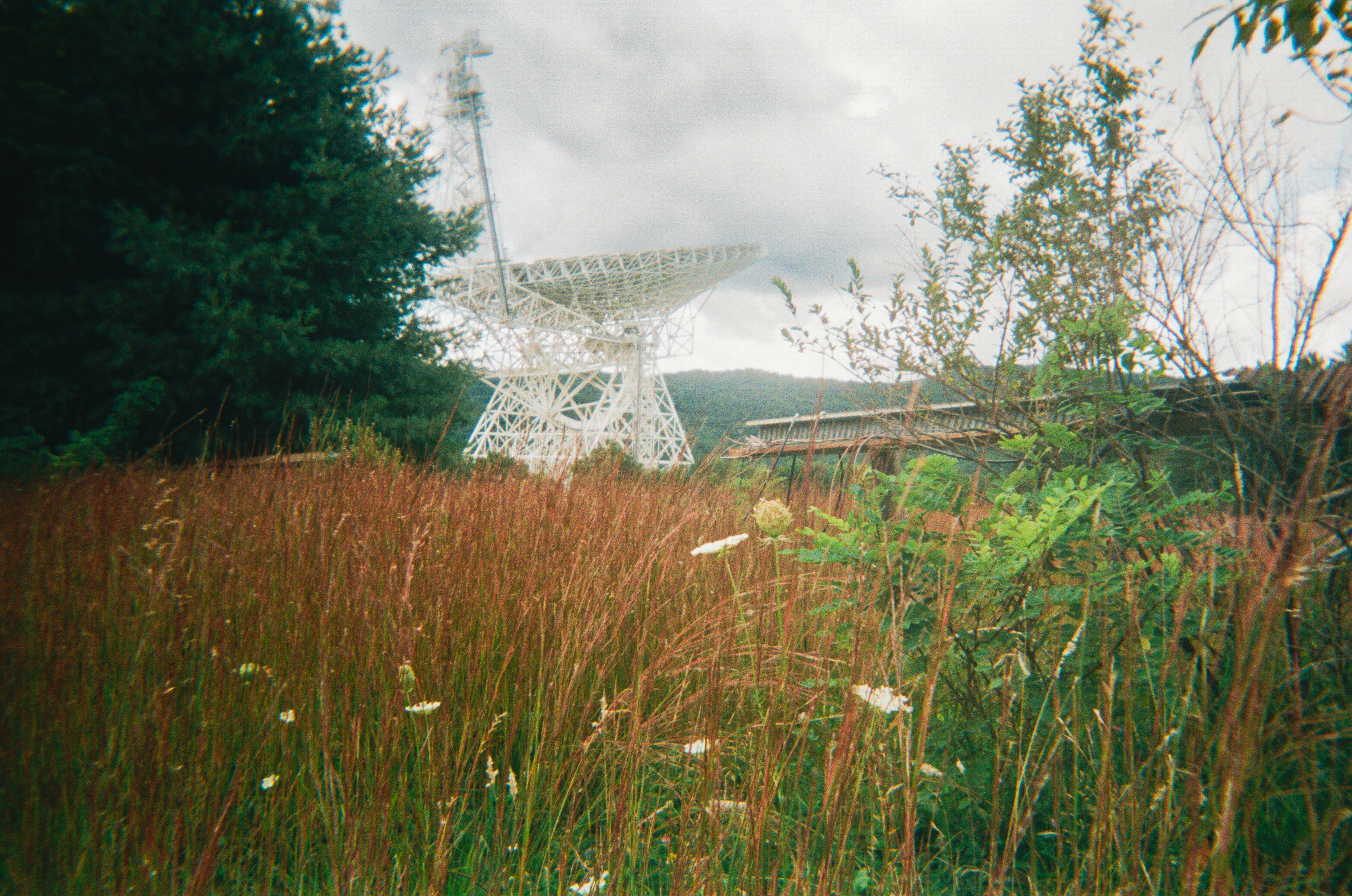
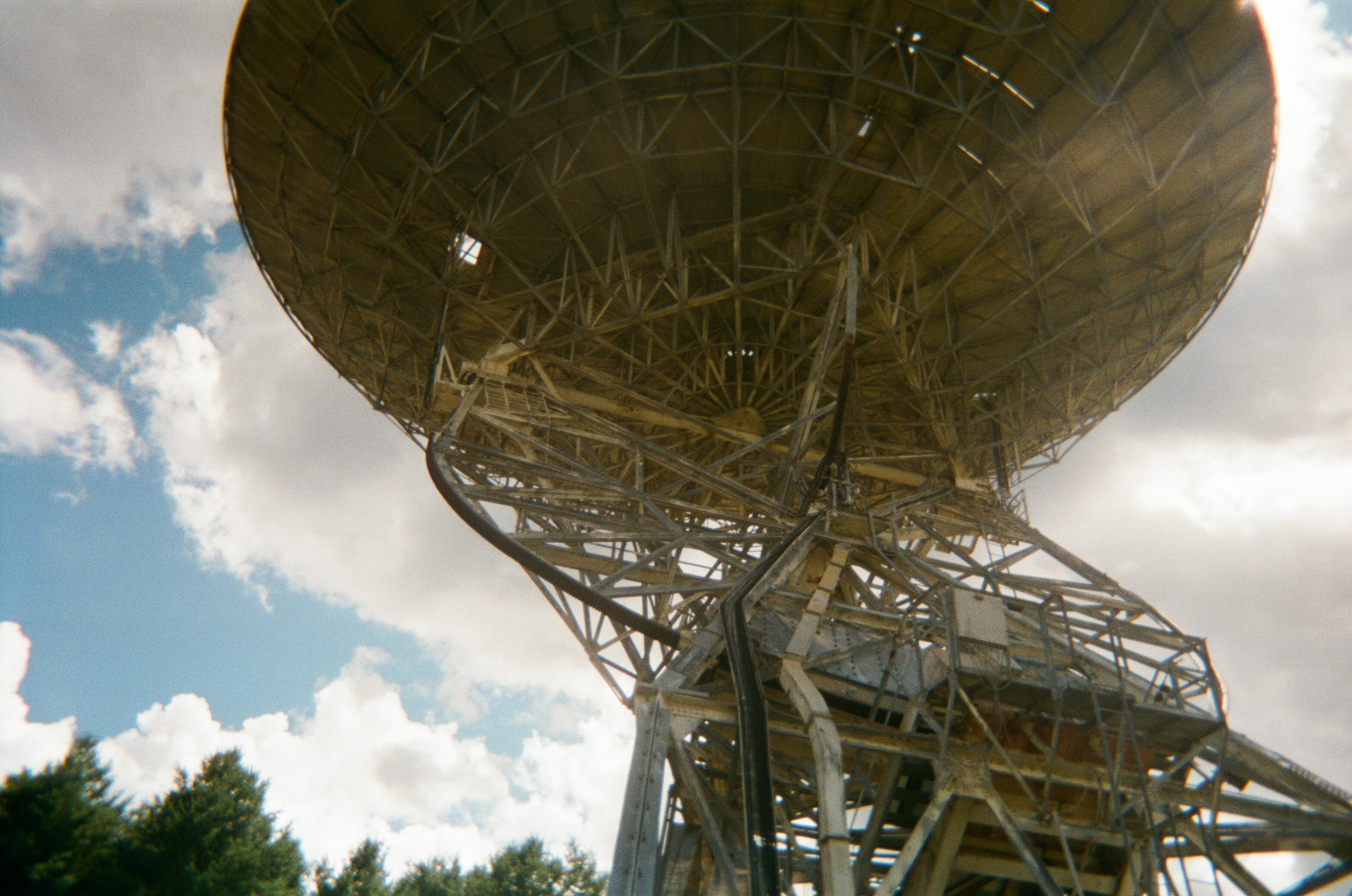
Armed with zero water, no sunblock, inappropriate shoes, a handout with information about each of the telescopes, and an overpriced Kodak disposable camera, we set out. The telescope looked close, but distance is deceiving in those wide-open fields. Turns out, it’s over a mile and a half out to the Green Bank Telescope, and with nine other telescopes to visit and learn about, this turned out to be a not-so-quick side quest. Two and a half hours later, sunburned but full of newfound knowledge of space discoveries and telescopic operations, we had completed the full walking tour and seen nearly every telescope on the grounds.
I won’t spoil the fun by sharing all that we learned about the telescopes. You’re just going to have to trust me and plan a visit to see for yourself! However, I will share a bit of information about why this place is so cool and how you can make the most of your visit.
What Makes Green Bank Observatory So Unique?
The Green Bank Observatory isn’t just a roadside curiosity. It’s one of the most important hubs for radio astronomy in the world. Here’s why:
- The Green Bank Telescope (GBT)
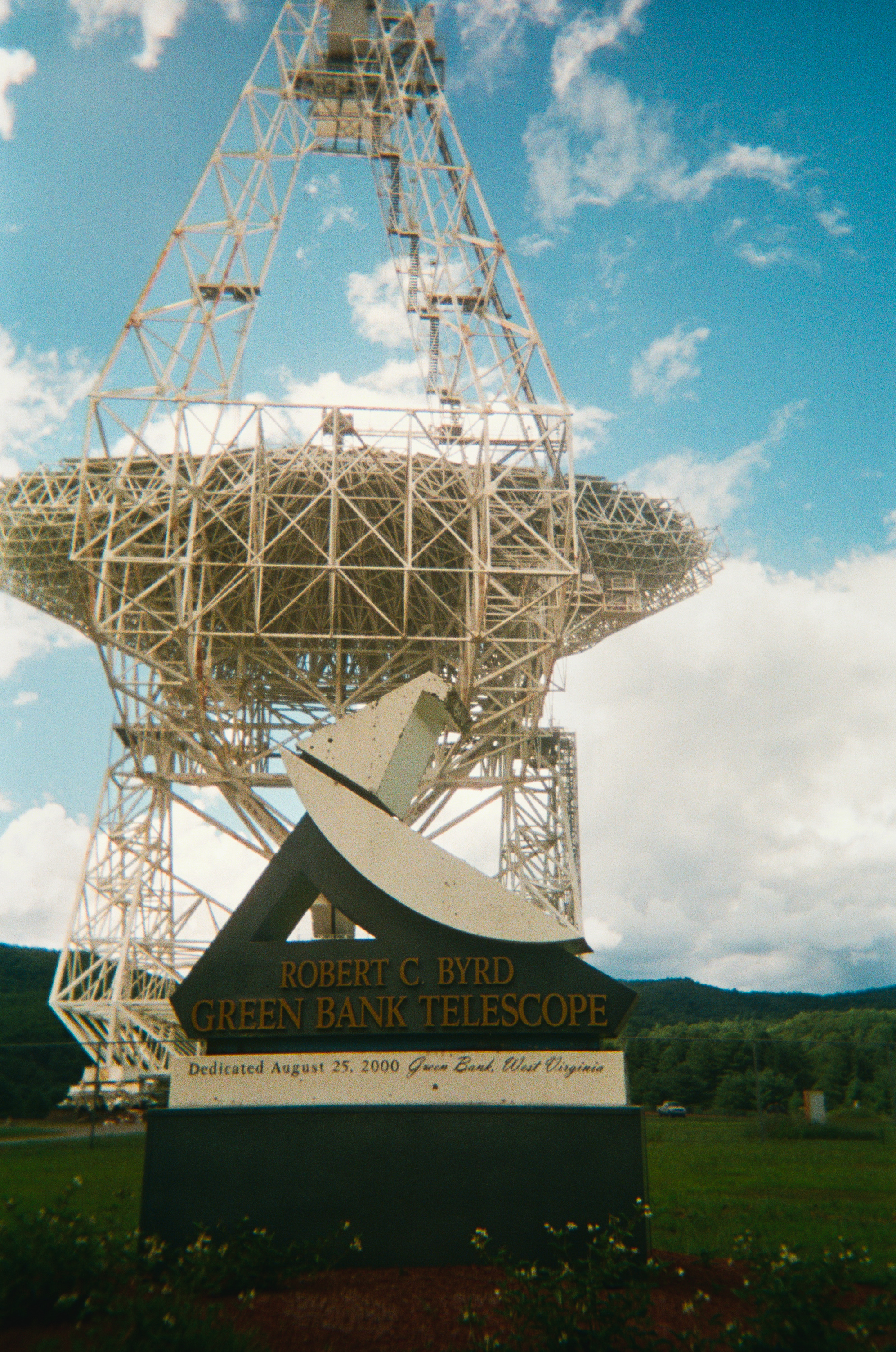
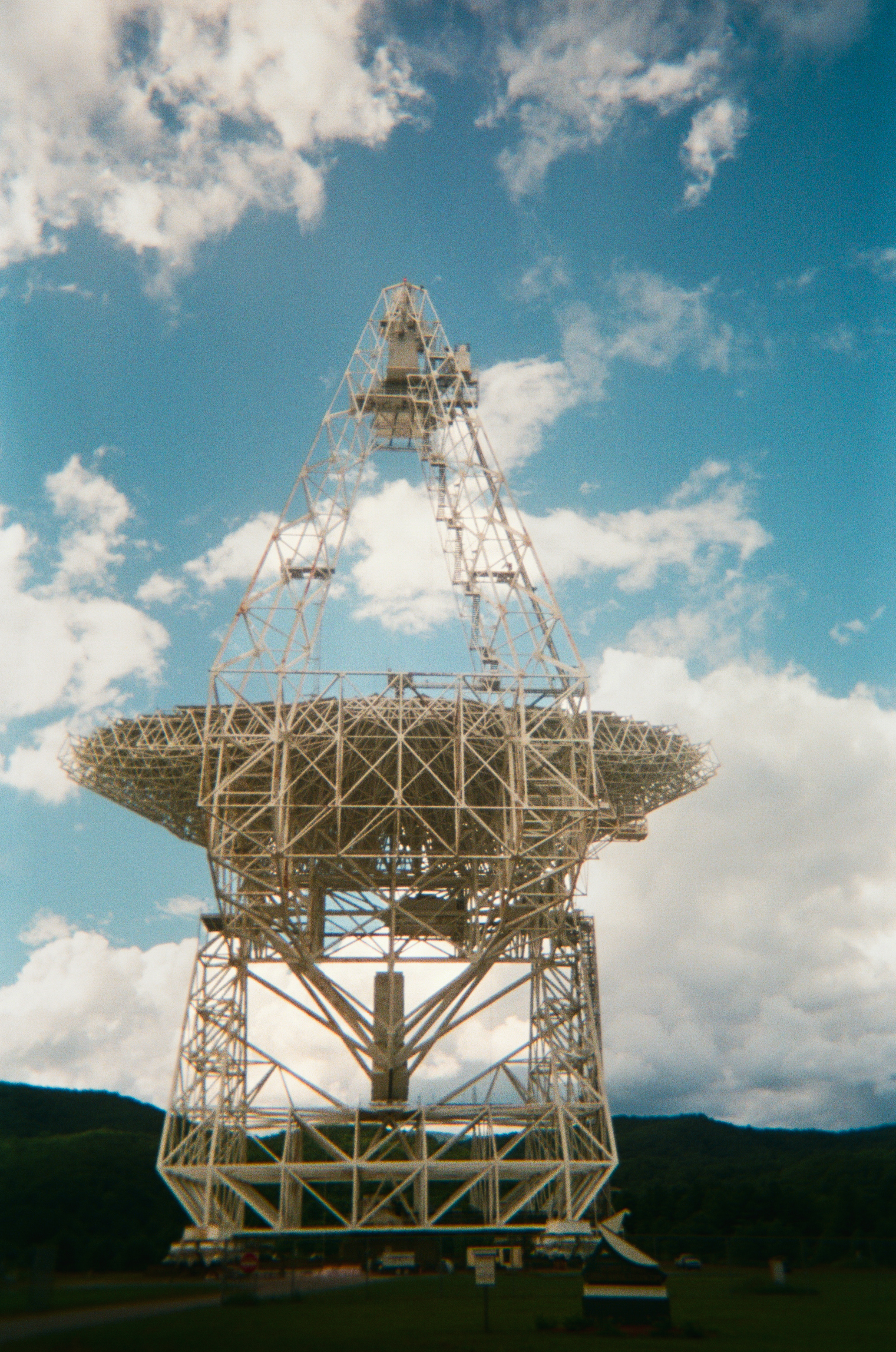
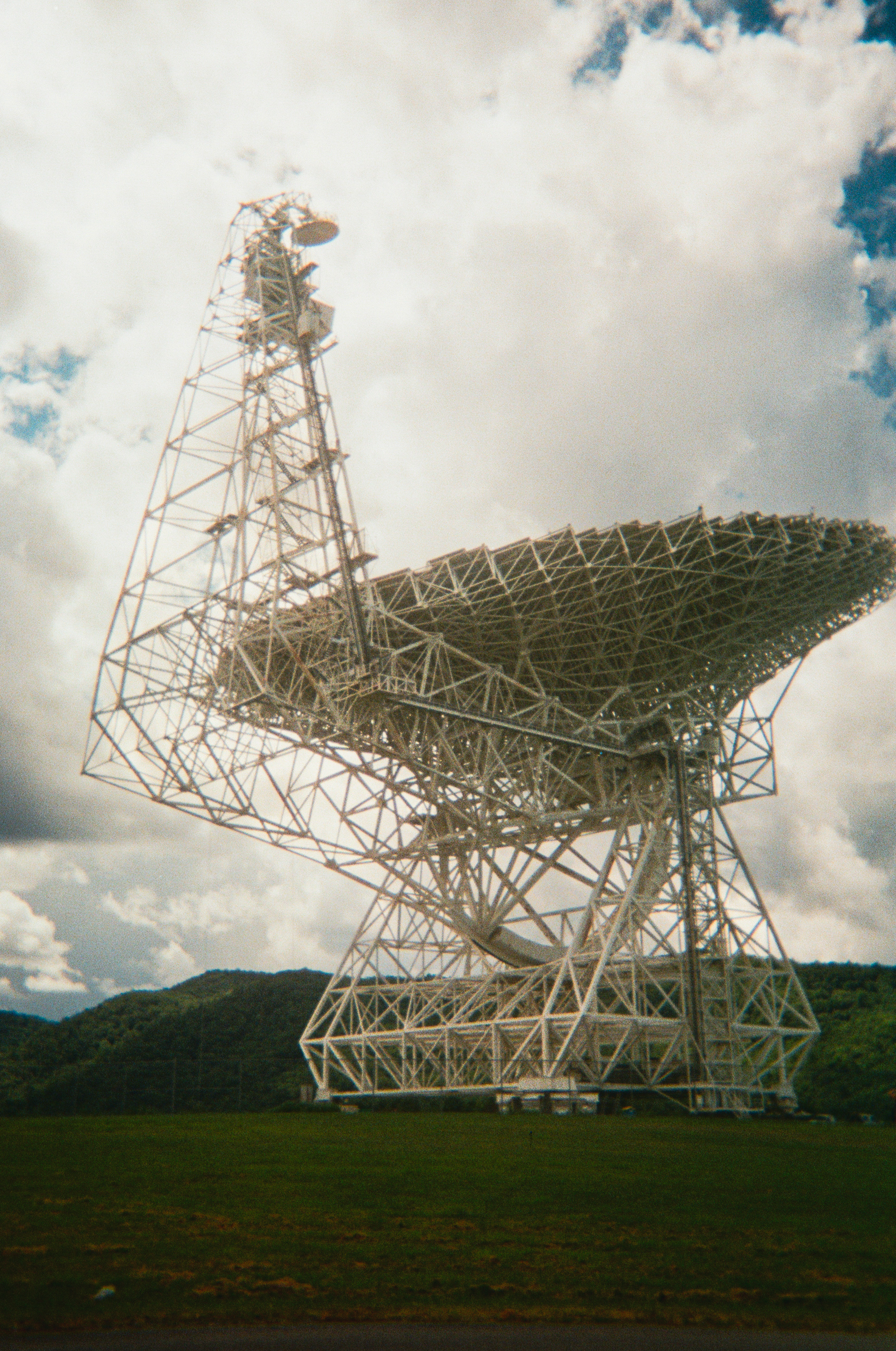
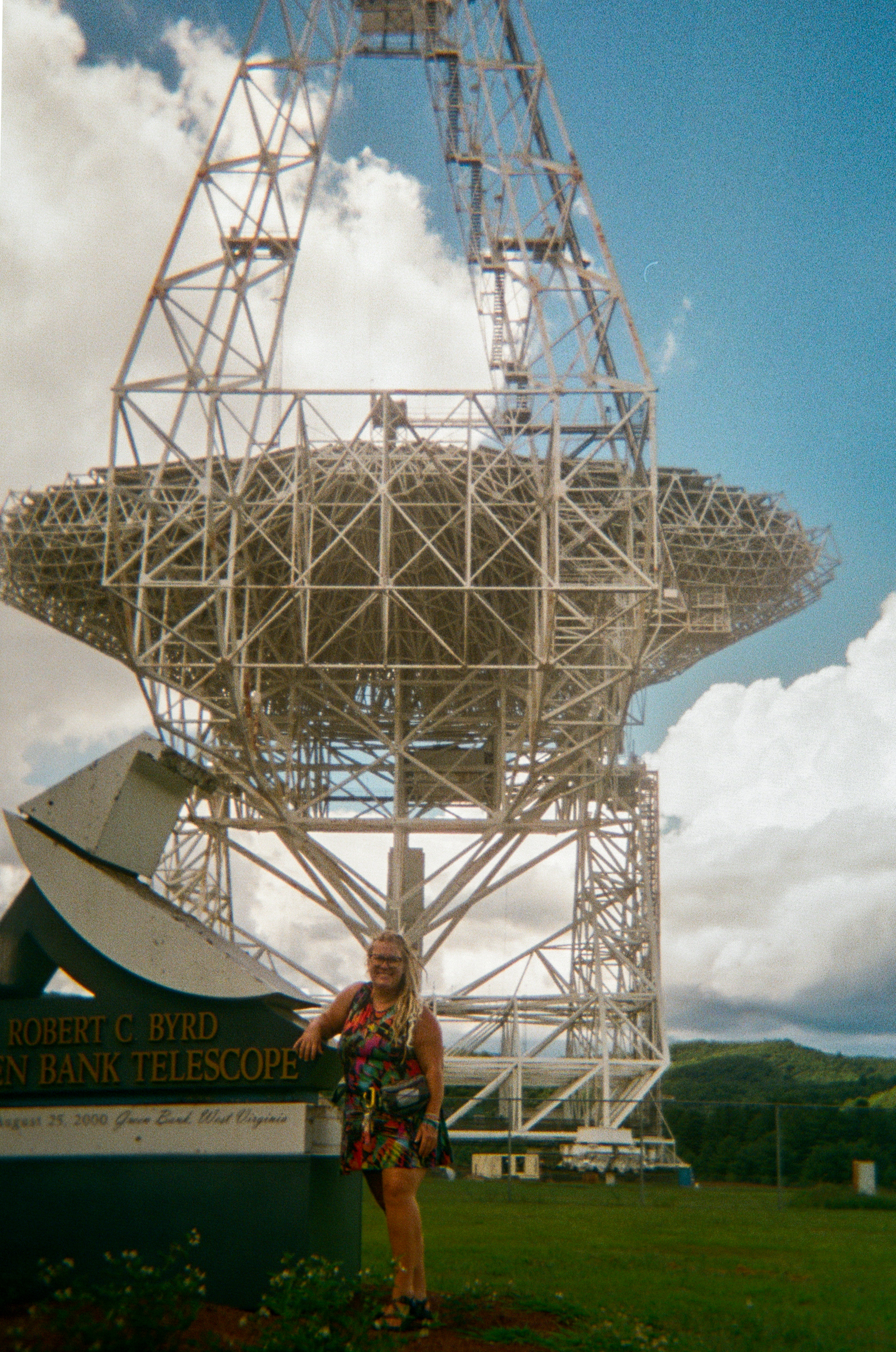
At 485 feet tall, the GBT is the largest fully steerable radio telescope on Earth. Unlike optical telescopes that collect visible light, the GBT collects radio waves, which means it can “see” through dust clouds and capture signals that our eyes could never detect. It’s used to map galaxies, study pulsars (rapidly spinning remnants of stars), and even measure tiny gravitational ripples in spacetime. - The National Radio Quiet Zone
Green Bank sits inside a 13,000-square-mile stretch of land where radio transmissions are restricted to protect the telescopes from interference. That means no cell service, no Wi-Fi, and no Bluetooth devices. Even small signals, like the spark plugs in a car or a microwave oven, can disrupt sensitive observations. Stepping into Green Bank feels a little like traveling back in time to a world without constant digital noise, while at the same time being surrounded by some of the most advanced technology in the world. - Science That Shapes Our Understanding of the Universe
Some of the most exciting discoveries in astronomy have come from Green Bank:- In 1967, the very first pulsar was discovered here.
- Astronomers have used the GBT to measure the faint “whispers” of hydrogen gas floating between galaxies, giving us clues about how the universe formed.
- The telescopes at GBO have helped study gravitational waves, black holes, and the chemistry of interstellar clouds—the very building blocks that form stars and planets.
- It’s also a key site for SETI (the Search for Extraterrestrial Intelligence). In other words, if we ever pick up a signal from another civilization, there’s a good chance it’ll pass through Green Bank.


Visiting Tips
If you go, learn from my mistakes. Wear comfortable shoes and bring water, especially if you plan on doing the walking tour. The telescopes may look close, but you’ll be covering a lot more ground than you expect. The bus tour is a great option if you’re short on time or don’t want to walk in the summer sun, but the self-guided tour offers the freedom to linger and explore at your own pace. There is actually an entire network of trails here. We pieced together an ~4-mile loop using the road and the Nature Trail, but much longer hiking or biking routes are possible.
If you’re into photography, consider bringing along a film camera if you have one, or purchase a disposable camera. I admittedly had very low expectations but the photos I captured with the Kodak disposable from the Science Center turned out better than I ever could have imagined. The contrast between the nostalgic, analog quality of the film and the high-tech environment being photographed was really neat to experience. All images shared in this post were taken on the disposable camera I purchased at the Science Center, and were processed and scanned by Indie Film Lab.
If you want more from your experience than a simple walking tour, consider timing your visit to coincide with one of the many public events hosted by the GBO. They organize events ranging from full-moon parties to SETI and high-tech tours that allow a closer look inside the technology and telescopes that make Green Bank Observatory what it is.
Final Thoughts
Green Bank Observatory is one of those places that blends science, history, and adventure in a way that fills you with wonder and excitement. Whether you take the bus, brave the walking tour, or attend one of the Observatory’s educational programs, you’ll leave with a deeper appreciation for the groundbreaking work being done here, and for the vastness of the universe it helps us understand.
Have you visited Green Bank Observatory? Would you want to? I would love to hear your thoughts in the comments!

 Adventure Like A Girl
Leave a comment