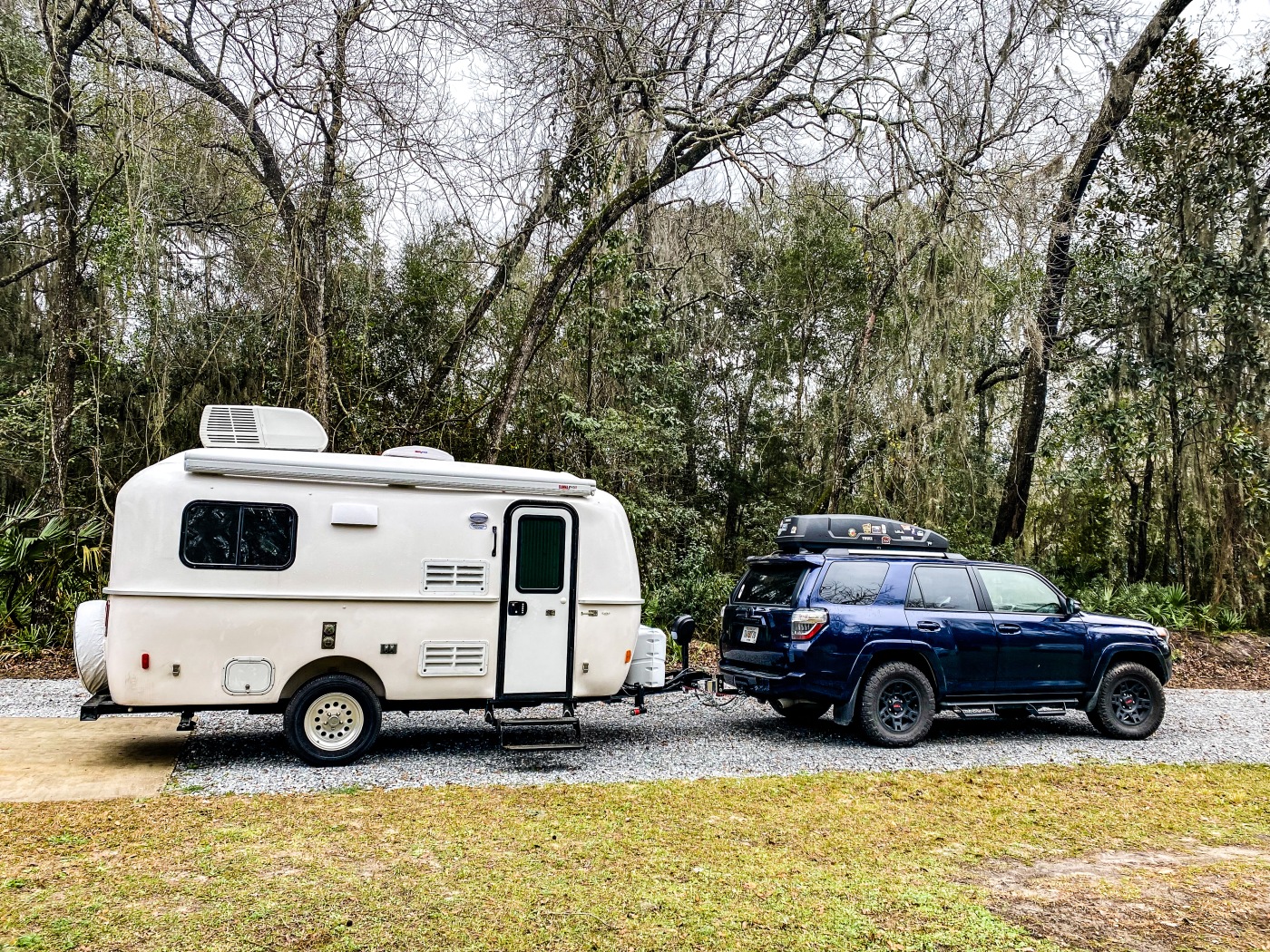
Amidst the #vanlife fanaticism and a general trend amongst outdoorsy folks seeking a more meaningful, minimal, and nomadic lifestyle, tiny travel trailers haven’t exactly gone viral. I’m not sure why more people don’t choose them, besides the fact that #traveltrailerlife isn’t quite as catchy of a hashtag. Six years ago, I chose a used Casita because I could afford it, I could tow it, and what research I’d done on it sounded promising. I bought a 1991 model Casita Spirit Deluxe that I found on a sale forum, sight-unseen, in fact having never seen ANY Casita in person. Even though the vintage Casita I ended up with back then had a lot of issues, after owning one for three years I was sold, not only on travel trailers as the superior form of nomadic living, but on the Casita specifically: for it’s durability, market stability, size, weight, functionality, and of course, cuteness.

First up: Why I didn’t choose a different type of camper.
While living in a campervan looks glamorous on Instagram, the reality can be quite different. Even large vans are quite small inside, don’t generally have plumbing/running water/bathroom without some serious and expensive modifications, and they require you to literally drive your house everywhere. As a working professional, being able to park my “house” and drive away in my “vehicle” — to work, to hike, to go to the grocery store, etc. — was essential. This necessity pretty much immediately turned me off from campervans as well as Class C’s (smaller, drivable RV’s). I simply cannot have my only vehicle being the one I’m living in and driving. Class A’s were never even a consideration; they are simply too big and too expensive.
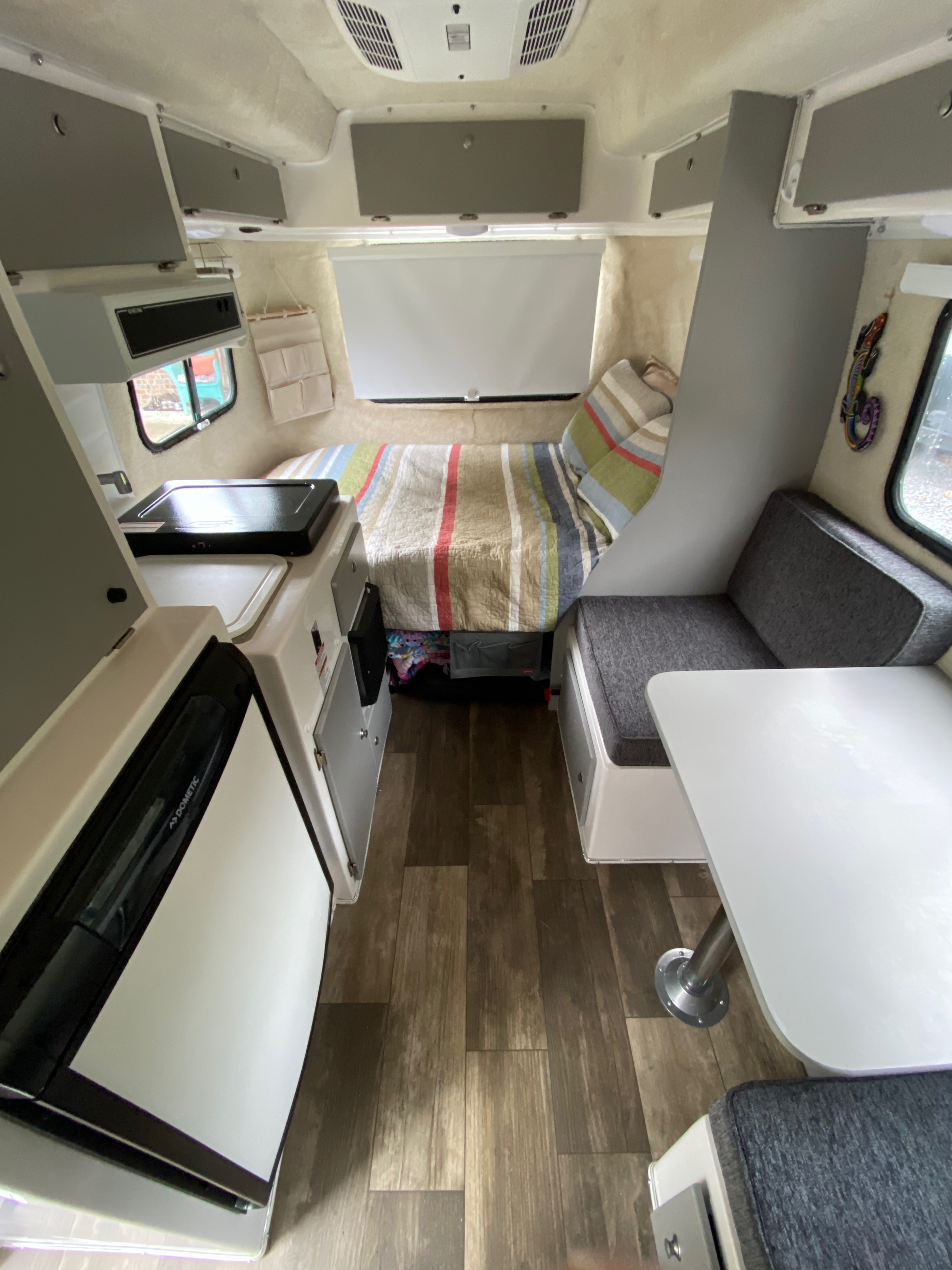
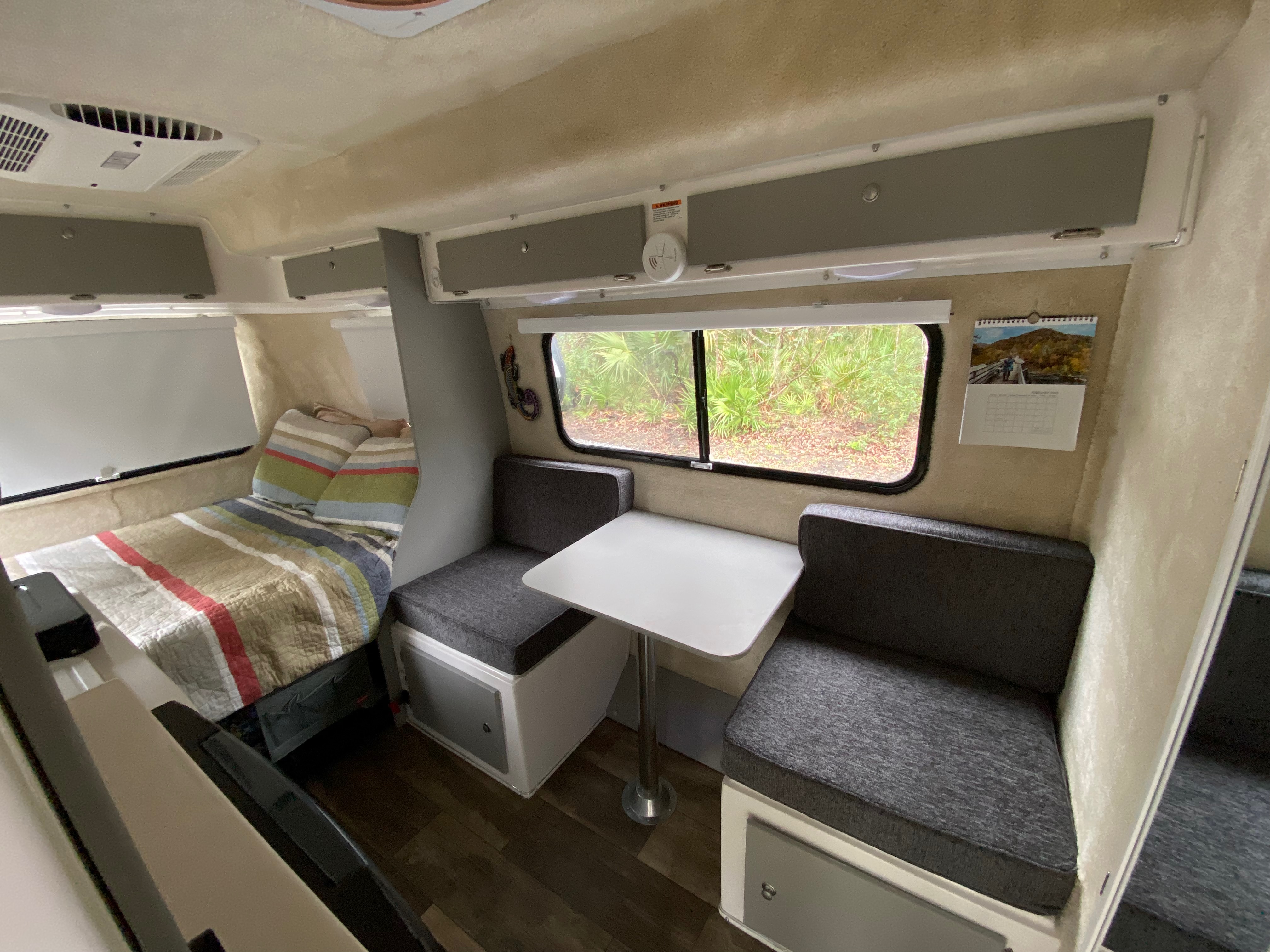
Now, why did I choose a tow-behind travel trailer (TT)?
Travel trailers offer the unique advantage of being able to leave them behind when you need to. Since I work “outside the home” (at a hospital, I work at a hospital), I need to be able to get in my vehicle in the morning and drive to work, leaving my “home” set up as just that: a home. My dog needs to stay in the camper when I’m at work. I need to be able to leave my air conditioner and refrigerator running. I want to be able to leave my power, water, and sewer hooked up at whatever location I’m staying at. Because I travel full-time for work, I’m often in one location for an extended period of time (standard is ~3 months). I’m not moving every few days, and I’m not working “from home.”
Another reason for choosing a travel trailer is that campervans and Class C RV’s can’t go to a lot of the remote trailheads and campsites that I enjoy going to, but my 4Runner can, and my Casita will be as off-road capable as I can get her. Either way, I wanted to be able to leave my “house” parked and drive my truck off to hike a trail, kayak at the lake, go rafting, go off-roading, etc. I don’t want to be limited on where I can go by the vehicle I’m driving. A tow-behind travel trailer fit the bill better than any other type of recreational vehicle, because it allows me to drive my 4×4 vehicle and tow my home-on-wheels everywhere I go.
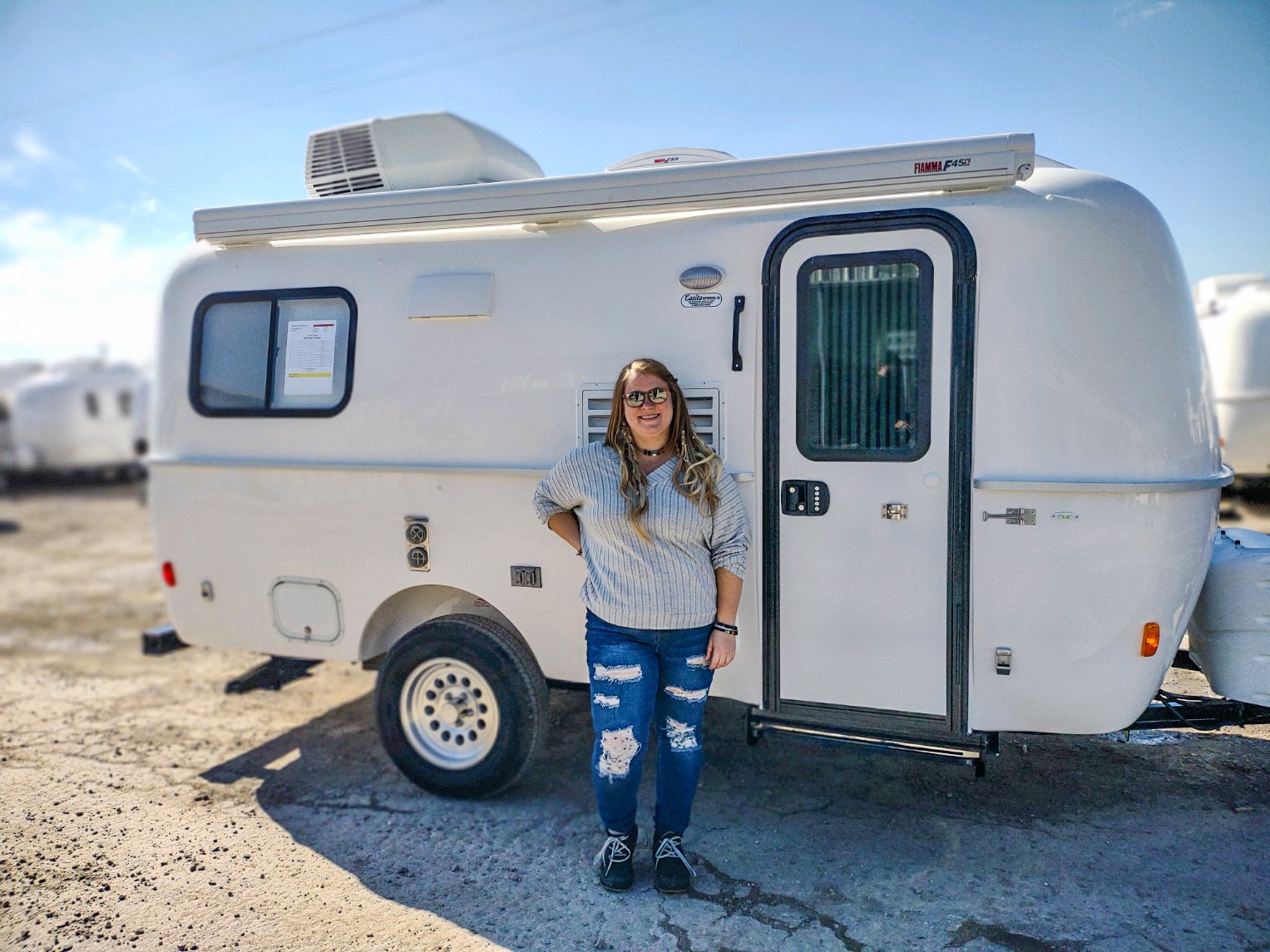
And specifically, why I chose a Casita
When I was originally searching for a travel trailer six years ago after getting off the Appalachian Trail, I spent hours a day for weeks on end researching various models and styles. I didn’t have much money and I wanted to make sure that when I finally made that purchase, it was the right purchase. Looking back, there were a lot of things I didn’t know to look for and purchasing that specific trailer may have been a mistake (it ended up having a lot of undisclosed issues), but ultimately I knew Casita was the brand for me, and through gutting and renovating my Margarita Casita, I learned so much about how to live in a camper, how to work on campers, and about the inner workings of these little fiberglass eggs. Following are a few reasons why fiberglass trailers are the best trailers out there.
Virtually leak-proof
Fiberglass trailers like the Casita almost NEVER leak. Most of them are designed basically like two fiberglass boat shells, one upside down on top of the other, sealed together. There are no seams or joints so there are no opportunities for leaks. If you get a leak it almost always comes from a dry-rotted window seal, a leaky connection, or a busted pipe, not from a structural issue. My previous thirty-year-old Casita did not leak. My new one should maintain its longevity for at least that long.
It can be pulled anywhere, by [almost] anything
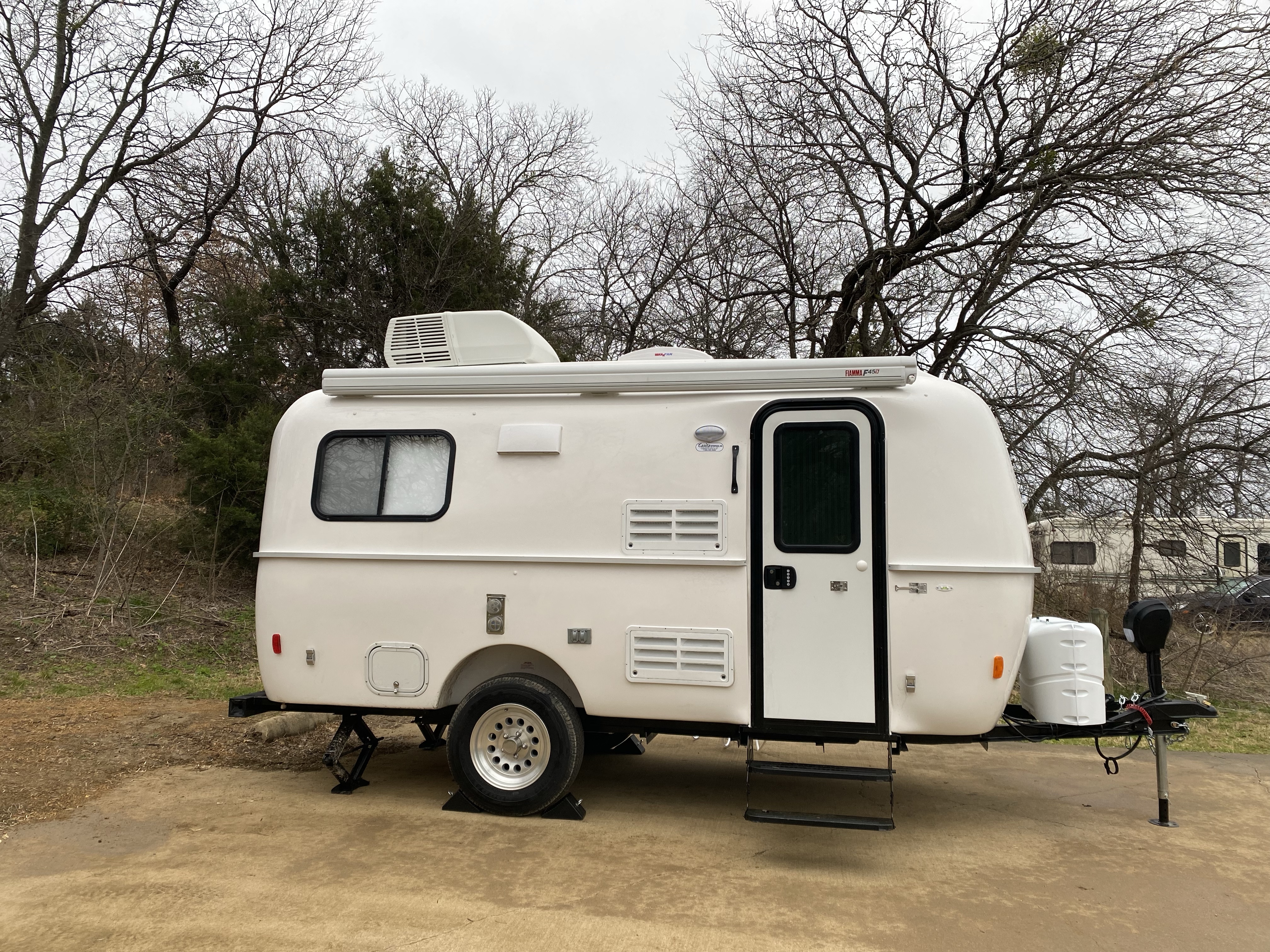
All Casita models currently in production are 17ft long and weigh approximately 2200-3000lb depending on model and options (you can still occasionally find older 13ft and 16ft models for sale though, and these are significantly lighter weight). This puts them well within the towing limits of many types of vehicles, and means better gas mileage while towing. With a few factory or aftermarket upgrades (I’m opting for a high-lift axle, shock kit, and larger tires), the Casita is capable of handling bumpy dirt roads for off-grid adventures, and it can be parked in the smallest, most precarious camping spots — places larger trailers and RV’s can’t get to. It’s more off-road capable than most camper-vans, and can easily be towed by my 4Runner.
Reasonable price point + market stability
Despite the current demand for these trailers dramatically outpacing supply (they are only manufactured in one small facility in rural Texas and the current wait time is 13-18 months depending on model), the price point on these trailers is extremely reasonable. They are priced similar to — or in some cases well below — comparable size/weight stick built trailers, and are much less expensive than some other fiberglass trailers on the market. Additionally, Casitas actually increase in value the moment you drive them off the manufacturer’s lot, rather than immediately decreasing like most other recreational vehicles. This is due mostly to the supply/demand imbalance mentioned above: people will pay more than purchase price to get it TODAY vs. waiting over a year.

They are just plain cute.
Y’all, Casita’s are CUTE! They look like big rolling eggs. As someone who has always loved the design and aesthetic of Airstreams but has never been able to afford one (or wanted to own a big enough vehicle to tow one), the Casita is a nice compromise. It has the same rounded edges and streamlined appearance, without the weight or price tag. Casita’s are also highly customizable, and the white “eggshell” exterior can be painted or wrapped for a custom look. I’d love to eventually have some custom graphics added to mine, but for now she is perfect just the way she is. I ordered without Casita logos, aka she’s “naked,” because I like the sleeker, more modern look of the Casita without the dated factory logos.
What’s not to love about a Casita?
There aren’t many downsides to a Casita as a solo traveler, or even as a couple traveling together. The Casita does have a pretty small bathroom that a tall person can’t stand up in, and the Spirit model, which is the most popular, has a sideways bed configuration that requires two people to crawl over each other if sharing the bed. However, as a solo traveler who is only 5’3, it is perfect for me!
Now, I think it is important to note that there are other fiberglass trailers out there. The other major manufacturers in the US are Scamp and Oliver, but you can find small fiberglass trailers by Boler, Uhaul, Trillium, and several other manufacturers. Scamp is Casita’s biggest direct competitor and offers a very similar style trailer at a similar price point. They have slightly different layouts than the Casita, and my biggest deciding factor was that I prefer the Spirit layout of the Casita to anything Scamp offers.
Oliver Travel Trailers are the Cadillac of fiberglass campers. Notable differences are a larger size (19ft or 24ft), options that include a double axle, and higher-end finishes and appliances. Due to all of this, they are a nicer trailer than the Casita, but they are also twice as expensive and are significantly heavier, limiting the versatility.
Tips for purchasing a Casita:
- Research your tow vehicle capacity and make sure you can both tow AND stop a trailer that weighs ~3000lb.
- Contact Casita and ask to be put into touch with someone in your area that owns a Casita and take a tour– make sure it doesn’t feel too cramped and you aren’t too tall for it.
- Join some Casita Facebook groups and read and learn about these little trailers. There is a wealth of information out there. Some good ones are: Casita Owners of America and Casita Life.
- If you’re really dedicated, attend a fiberglass trailer rally; they are held all over the US and you would get the opportunity to tour multiple different types of trailers and make an informed decision about which one will work best for you.
- As soon as you are sure you want a Casita, place your deposit! Even if you haven’t figured out which options you want yet, placing your deposit gets you in the queue for a trailer. Lead times can be a year to a year and a half!

Options I chose:
Factory options:
- Furnace (propane powered; my old Casita didn’t have this)
- Outside Shower (so I can wash my dog/feet/hiking gear)
- Microwave
- LED Interior Bulbs
- Aluminum Alloy Wheels
- Solar Port
- Deep Cycle AGM Battery
- Electric Tongue Jack (makes life so much easier
- Roller shades (instead of blinds– I like the look of blinds better but roller shades block more light and Shooter destroys blinds)
- Leveling Blocks Set (probably can get these cheaper elsewhere however I did not want to have to haul them from Florida to Texas since space was limited in our truck, so I opted to get them at Casita)
- Folding Shelf (this is difficult to use if you use any type of mattress configuration other than the factory Casita cushions)
- Surge Protector (again, maybe could get cheaper elsewhere but I didn’t want to transport it)
- Casita Kit (includes tools you need on the road)
- High Lift Suspension Package
- Awning
- 180 W Solar Panel
- Anderson weight distribution hitch
Aftermarket options from Little Home on the Road:
- Shock kit
- Katy Closet
- Toilet shut-off valve
- Double step (mainly got this for Shooter so he doesn’t have to jump in and out of the Casita as he ages)
I intended to also get a Stromberg Carlson rack, which installs over the propane tanks and provides a rack at the front of the trailer for hauling a generator or storage bin. However, the rack did not arrive to LHOTR in time to be installed on my trailer so I was unable to get this modification done. It is high on my list of things to add in the future, as is a slide-out battery tray.
So, that’s it! The answer to why I chose a Casita
And also how I went about the purchasing and selection process for deciding which options to choose. In total, the cost of the Casita I chose, with all factory and after-market options included, was $32,300. With AirBNB/Furnished Finder/long-term hotels costing $1000-2000/month in most areas, and campground fees for small travel trailers costing an average of $400-700/month in the same areas, I expect this trailer to pay for itself within the first 2-3 years of ownership in how much money I save over renting short-term housing. As a bonus, I have a “home” I can take anywhere that has all my stuff in it, where Shooter and I are comfortable and not living in someone else’s space.
Have questions? Leave a comment or drop me an email through the contact form.
 Adventure Like A Girl
Stacia, this sounds like such a wonderful choice for someone with your lifestyle. As close as possible to perfection. I hope it’s every bit as good as it sounds!
LikeLiked by 1 person